How to Buy a Tax Lien Certificate

How to Buy a Tax Lien Certificate

Knowing tax lien investing exists is one thing; placing your first bid is another. This step-by-step guide walks first-time investors through the full process, from choosing a state and researching parcels to registering, funding a deposit, bidding, and monitoring the certificate after you win.

· 9 min read
Tax Lien Investing for Beginners: How to Start with Confidence in 2026

Tax Lien Investing for Beginners: How to Start with Confidence in 2026

Tax lien investing lets you step in where the county left off: pay someone's overdue property taxes, collect a legally mandated interest rate, and secure the whole thing against real estate. The concept sounds technical, but the mechanics are straightforward once you see them in sequence. This guide covers exactly how the process works, what a tax lien certificate actually gives you (and what it doesn't), and the five steps that take a complete beginner to a first purchase — with no hype about free houses and no jargon left unexplained.

· 9 min read
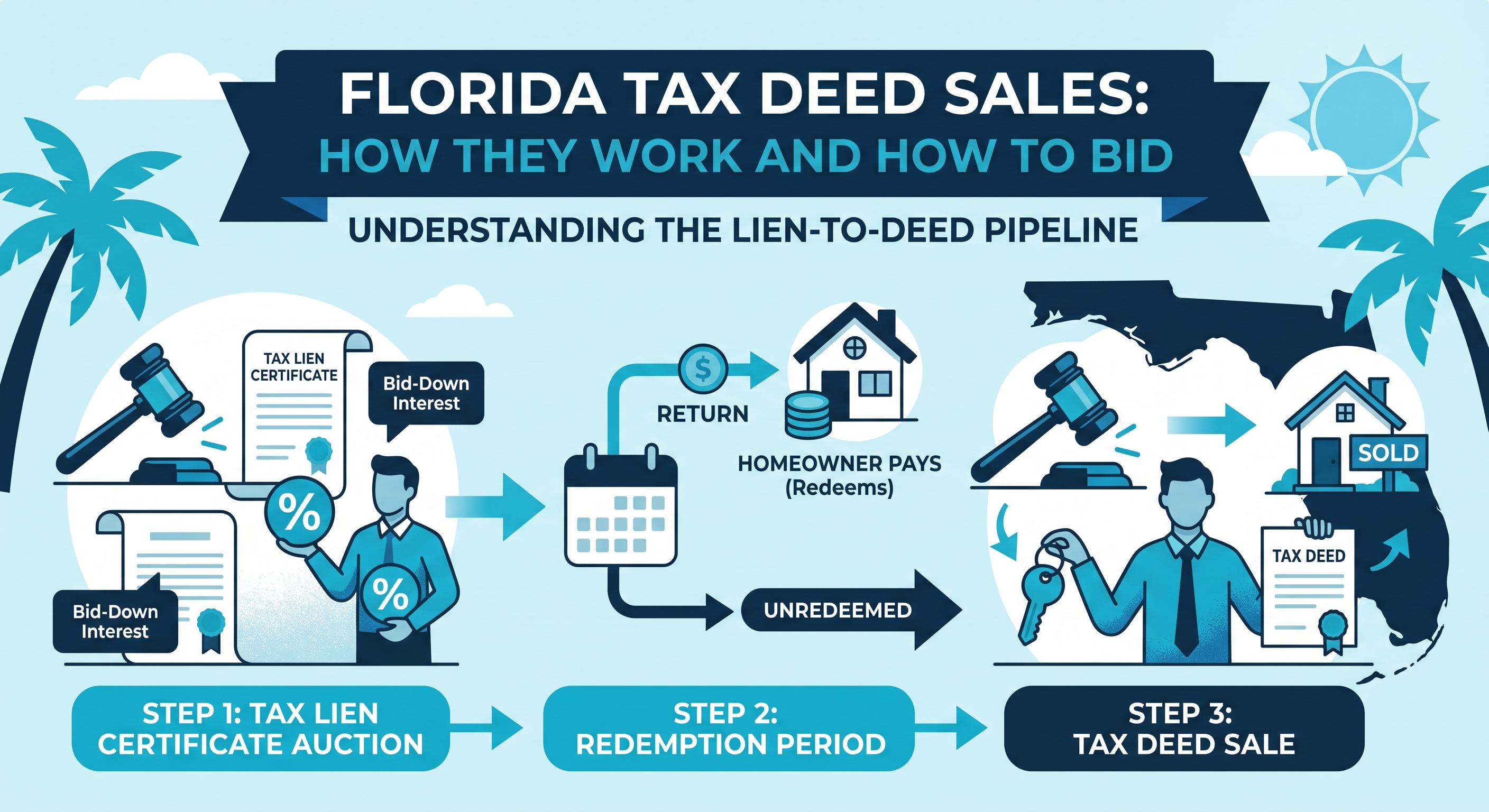
Tax Lien Investing in Florida: The Complete 2026 Guide to Certificates, Auctions & Returns

Tax Lien Investing in Florida: The Complete 2026 Guide to Certificates, Auctions & Returns

Florida runs one of the most structured tax lien systems in the country — 67 counties, nearly all online, open to investors anywhere in the US. The maximum interest rate is 18%, but you will rarely earn it. Auctions start at 18% and investors bid the rate down until one accepts the lowest return. On desirable urban parcels, that can mean winning at 2% or 3%. On overlooked rural certificates, you might win near the full 18%. What protects you is a feature most states don't have: a mandatory 5% minimum on redemption, regardless of how low you bid. This guide walks through the full process — delinquency timeline, auction mechanics, property research, and what happens in the rare case the owner never pays.

· 21 min read
Tax Lien Auctions: How They Work and How to Win Your First One

Tax Lien Auctions: How They Work and How to Win Your First One

The auction is where tax lien investing becomes real. Everything before it — the research, the screening, the property checks — leads to a single moment when you either win a certificate at a rate that makes financial sense or you walk away. Most first-time investors lose money not because they picked the wrong state or the wrong county, but because they showed up without a hard bid limit and let the auction decide for them. This guide covers how auctions actually work, the two bidding formats you'll encounter, and the preparation steps that determine your results before the sale even opens.

· 10 min read
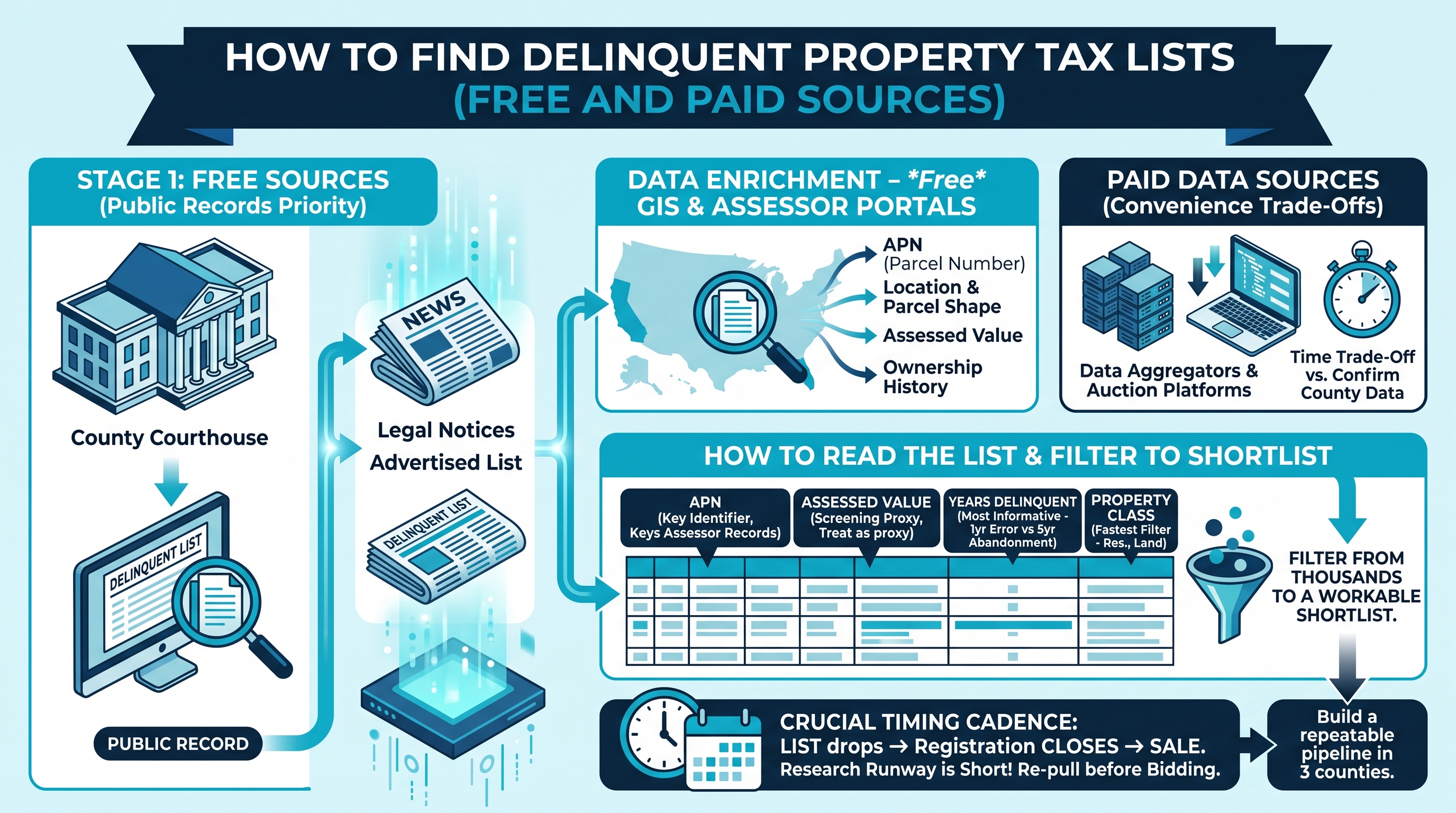
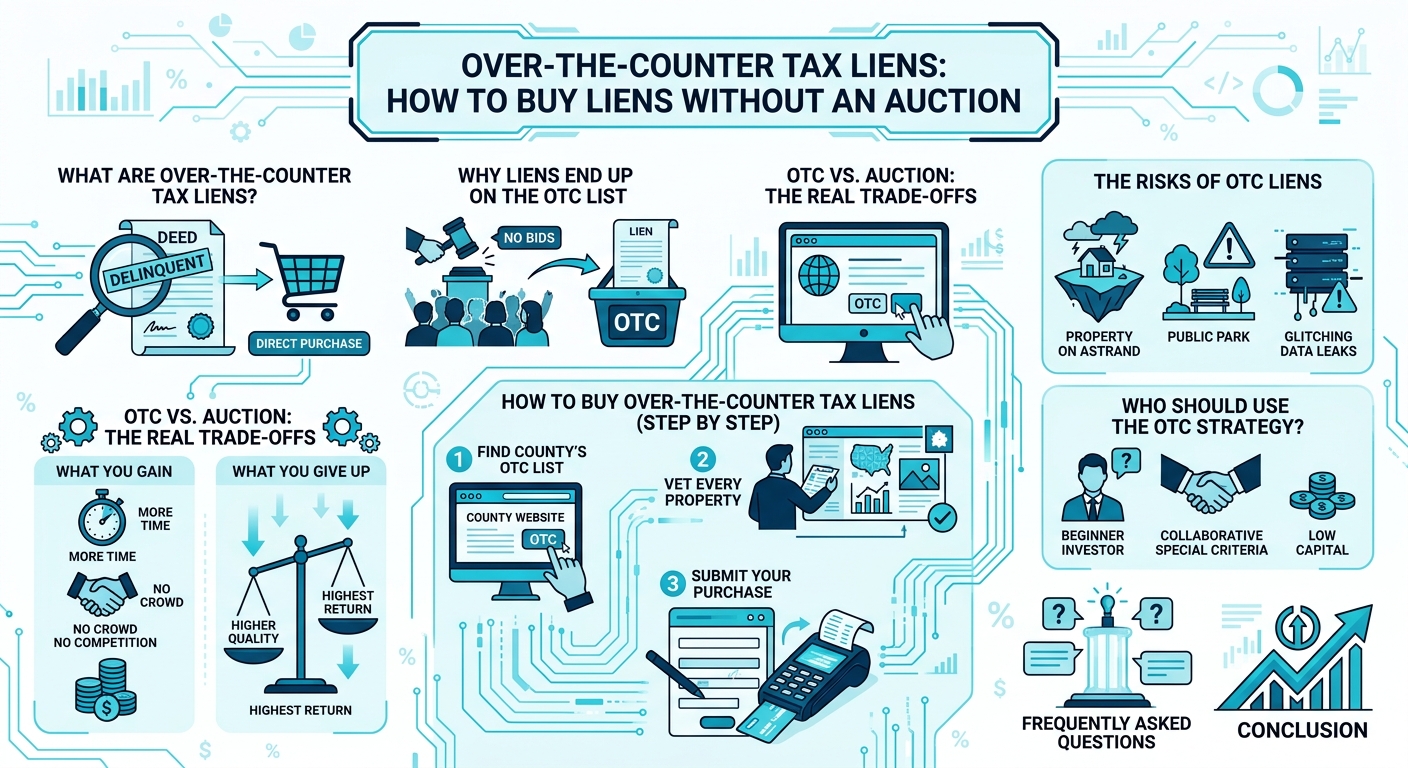
How to Find Tax Lien Properties: A Step-by-Step Guide for New Investors

How to Find Tax Lien Properties: A Step-by-Step Guide for New Investors

The certificates don't come to you. Most beginners spend weeks studying interest rates and redemption periods without ever answering the more immediate question: where do you actually find properties to bid on? This guide walks through the full process — from pulling the county's delinquent tax list to running a six-point property screen before auction day. By the end, you'll know exactly where to look, what to verify, and how to build a repeatable system that filters 200 properties down to the ones worth your capital.

· 10 min read
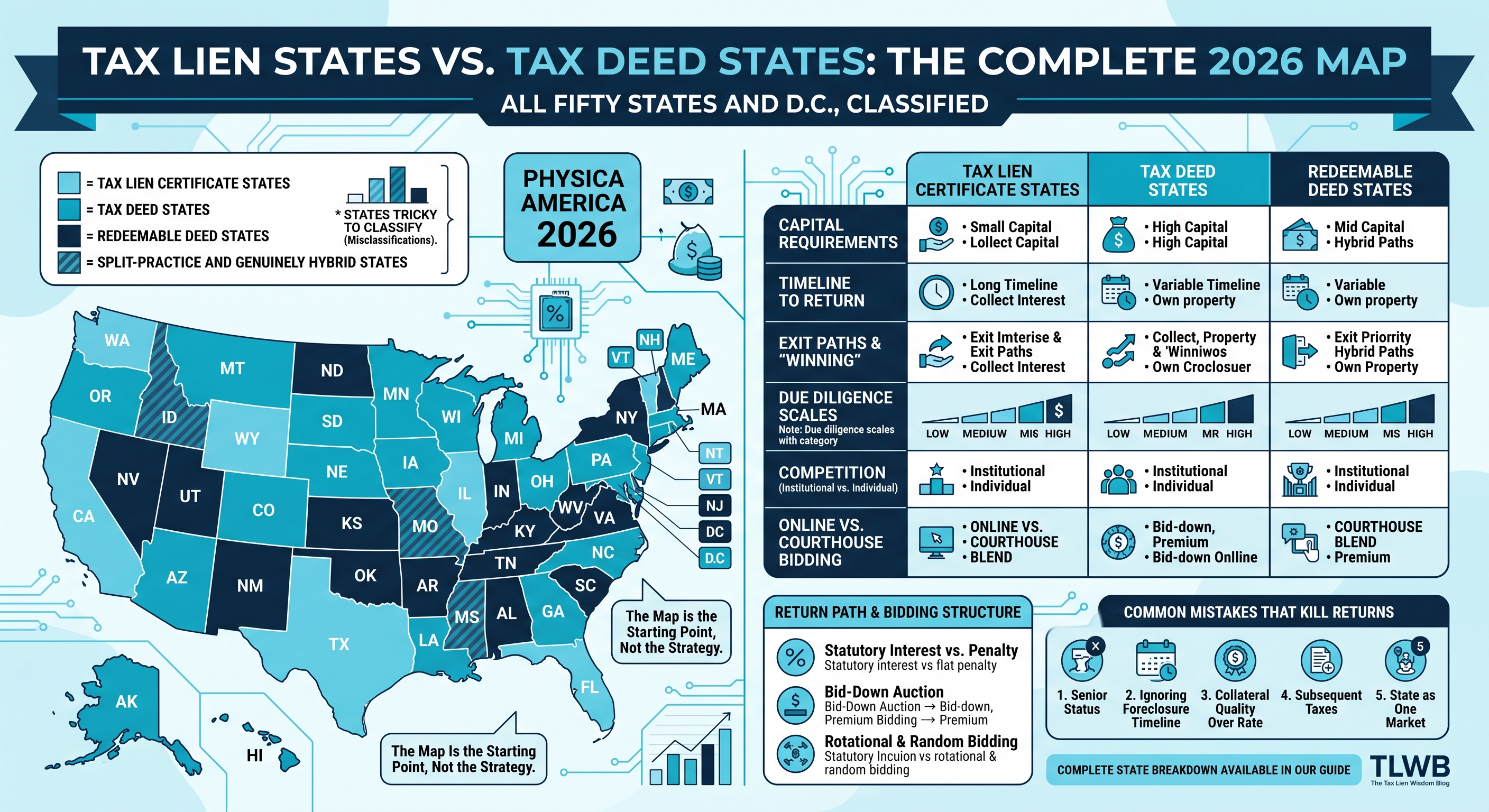
Best States for Tax Lien Investing in 2026: A Complete State-by-State Guide

Best States for Tax Lien Investing in 2026: A Complete State-by-State Guide

Not all tax lien states are created equal. Interest rates range from 8% to 36%. Redemption periods run from one year to three or more. Some states let you invest entirely online — others require you to show up at a county courthouse. The state you choose determines your return, your capital requirements, and how long your money stays locked in. This guide covers the seven strongest markets for 2026, breaks down the states to approach with caution, and includes a full reference table for every major lien and deed state in the country.

· 23 min read
Tax-Free Bonds: How They're Taxed, Who They're For, and How They Compare to Tax Lien Certificates

Tax-Free Bonds: How They're Taxed, Who They're For, and How They Compare to Tax Lien Certificates

Tax-free bonds aren't always as tax-free as they sound. Municipal bonds skip federal income tax on interest — but capital gains are fully taxable, some bonds trigger the AMT, and out-of-state munis get taxed by most states. This guide breaks down exactly how each bond type is taxed, who they actually make sense for, and why most bond investors have never seriously looked at the alternative: tax lien certificates paying 8–36% annually, backed by the same government authority.

· 10 min read
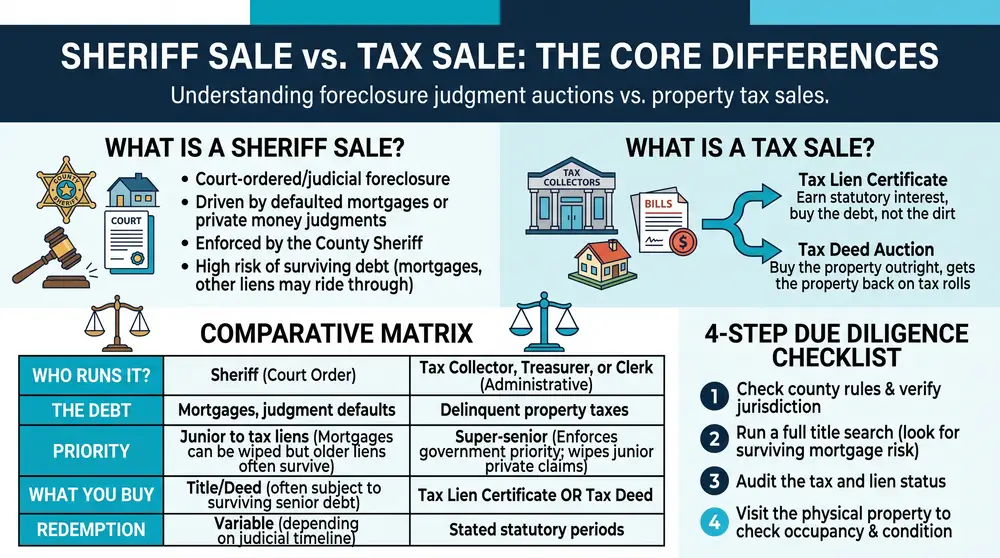
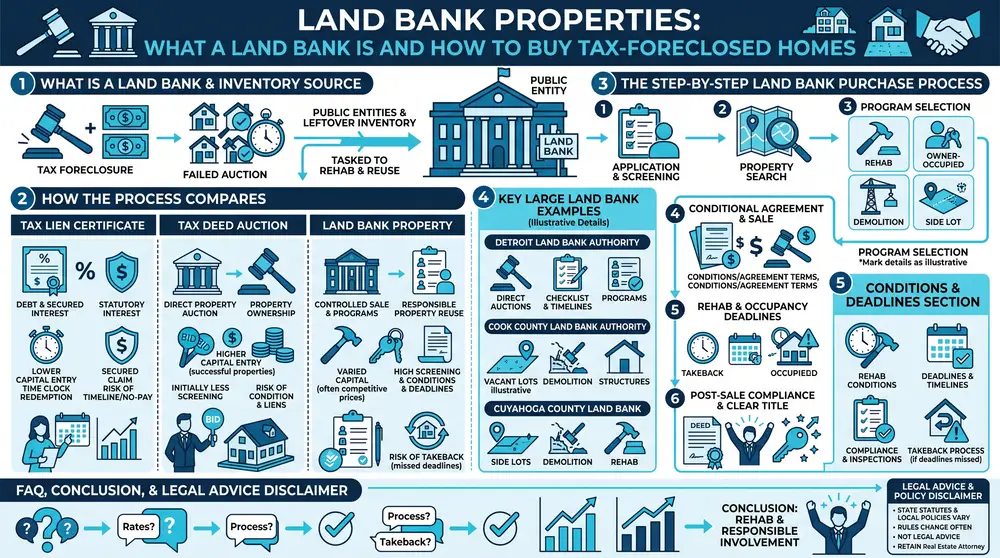
Tax Lien and Tax Deed Investing: What They Are, How They Differ, and Where to Start

Tax Lien and Tax Deed Investing: What They Are, How They Differ, and Where to Start

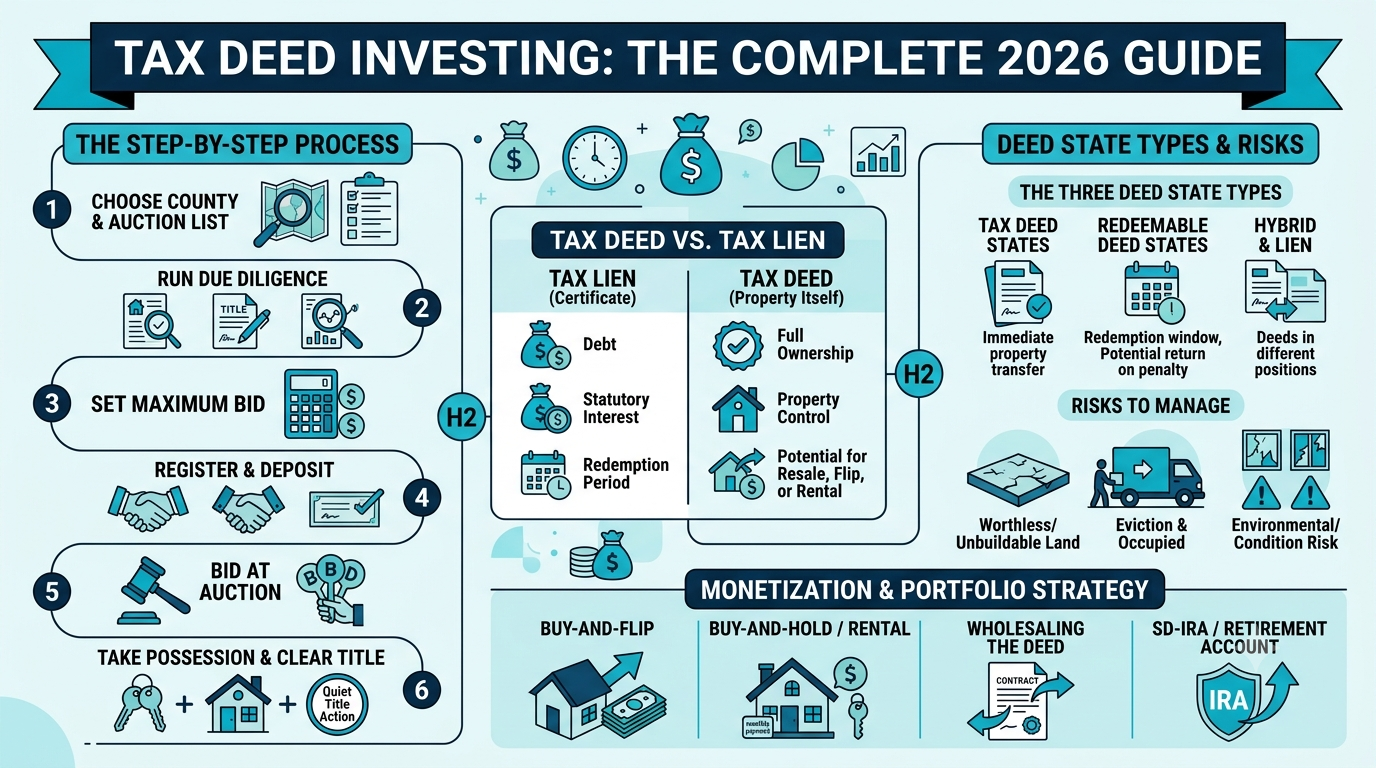
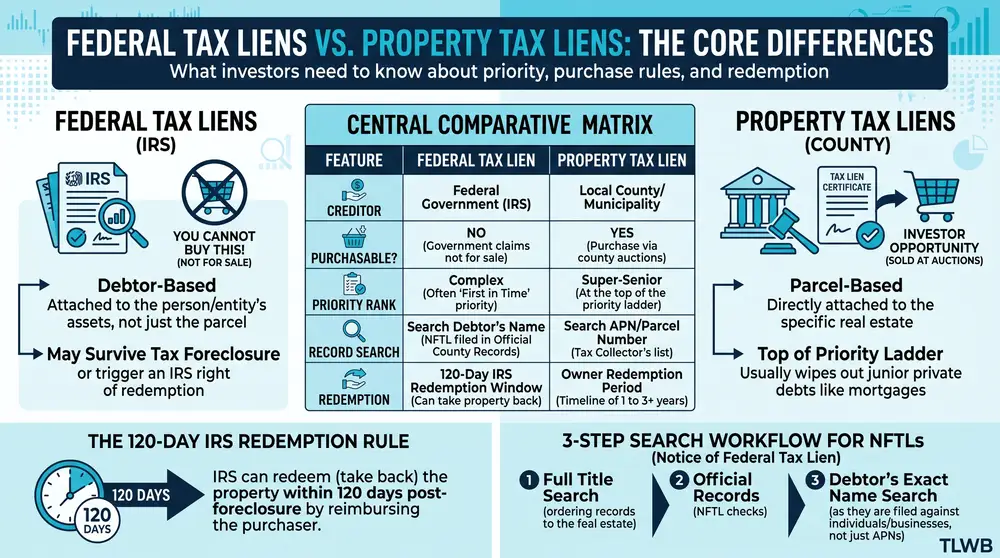
Tax lien and tax deed are two of the most misunderstood terms in real estate investing. Most beginners treat them as the same thing — they're not. One lets you buy the debt on a property and earn government-backed interest. The other transfers full ownership after a public auction. Different mechanics, different risk profiles, different capital requirements. This guide breaks both down clearly so you can decide where to start.

· 10 min read
How to Find a Lien on a Property (And What to Do If You Find One)

How to Find a Lien on a Property (And What to Do If You Find One)

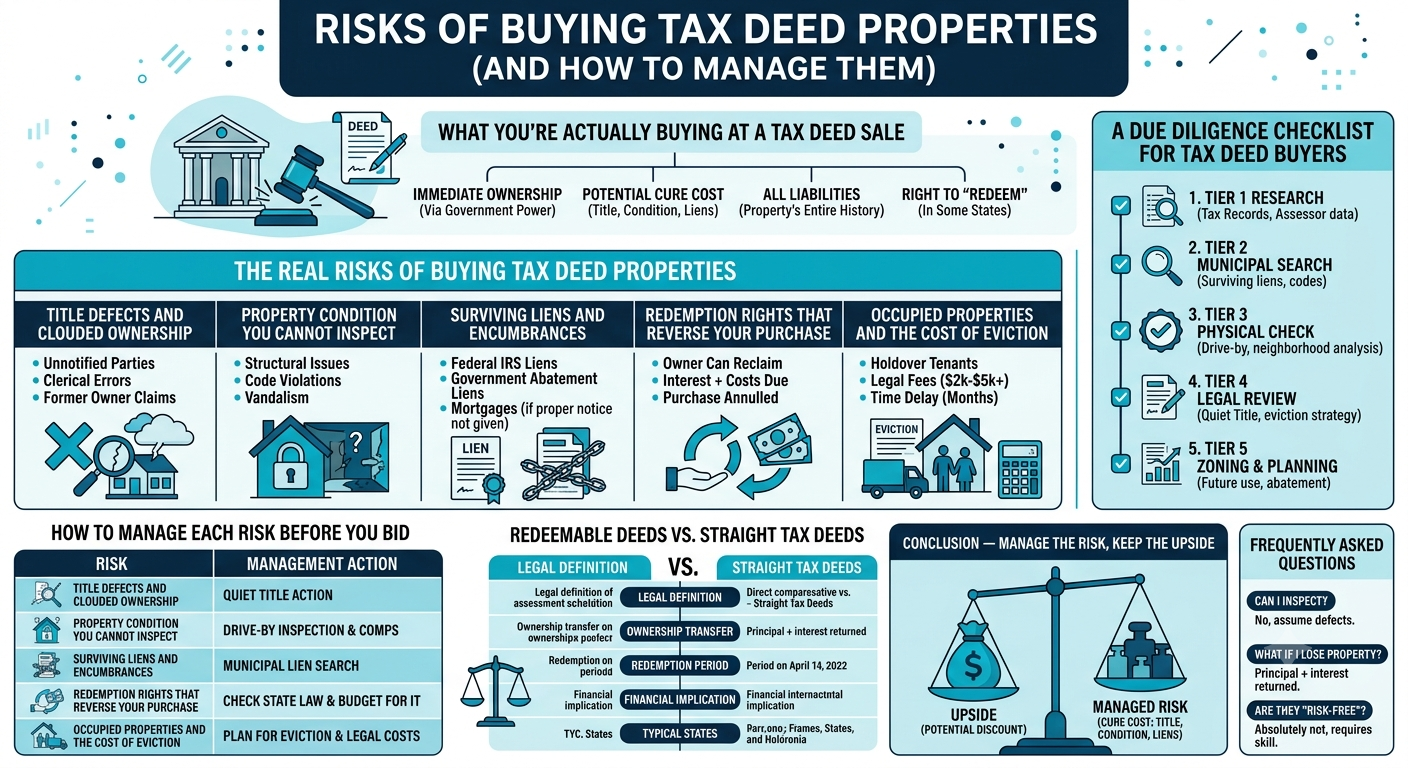
Before you buy any property, you need to know if it's clear. A lien is a legal claim that follows the property — not the owner — which means you could inherit someone else's debt at closing. This guide walks you through exactly how to find a lien on a property, what each type means, and how to act on what you find. Most of it is free. None of it should be skipped.

· 10 min read
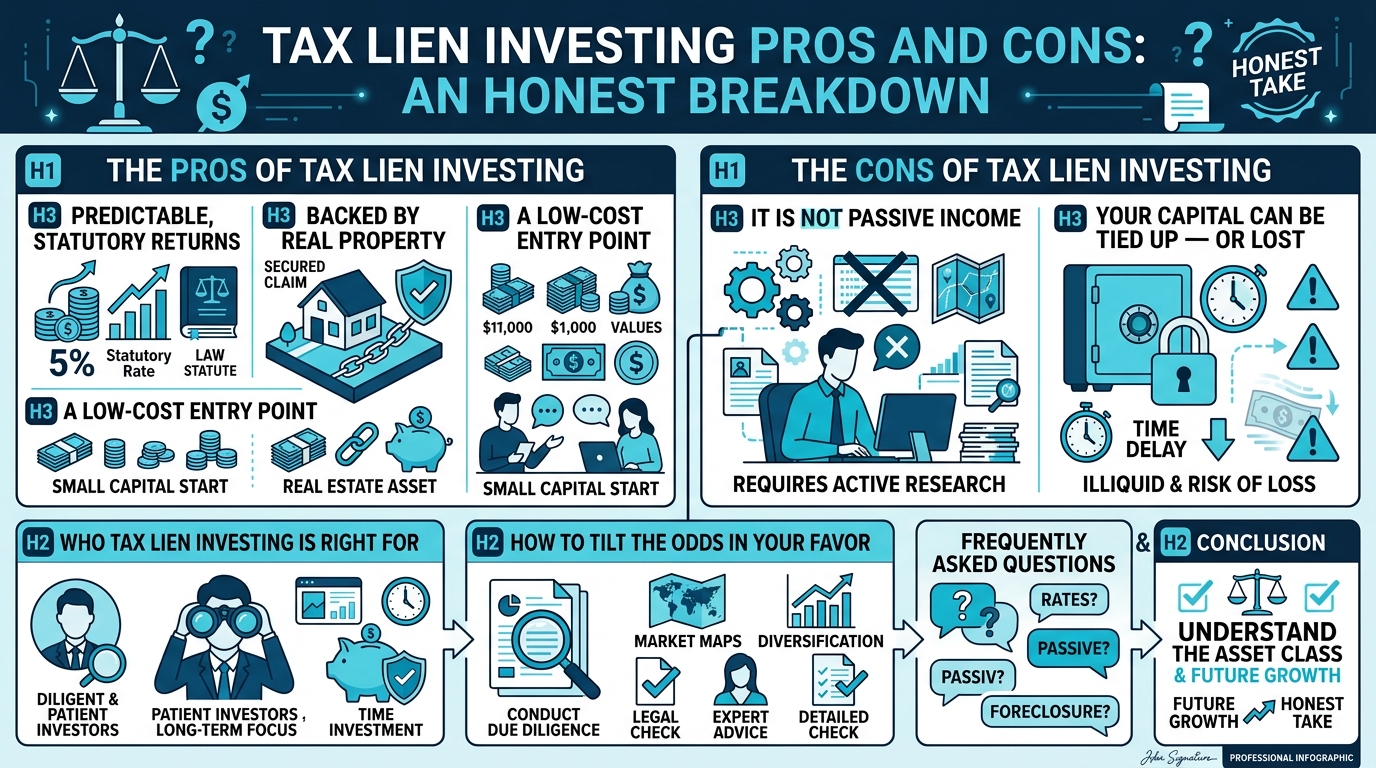
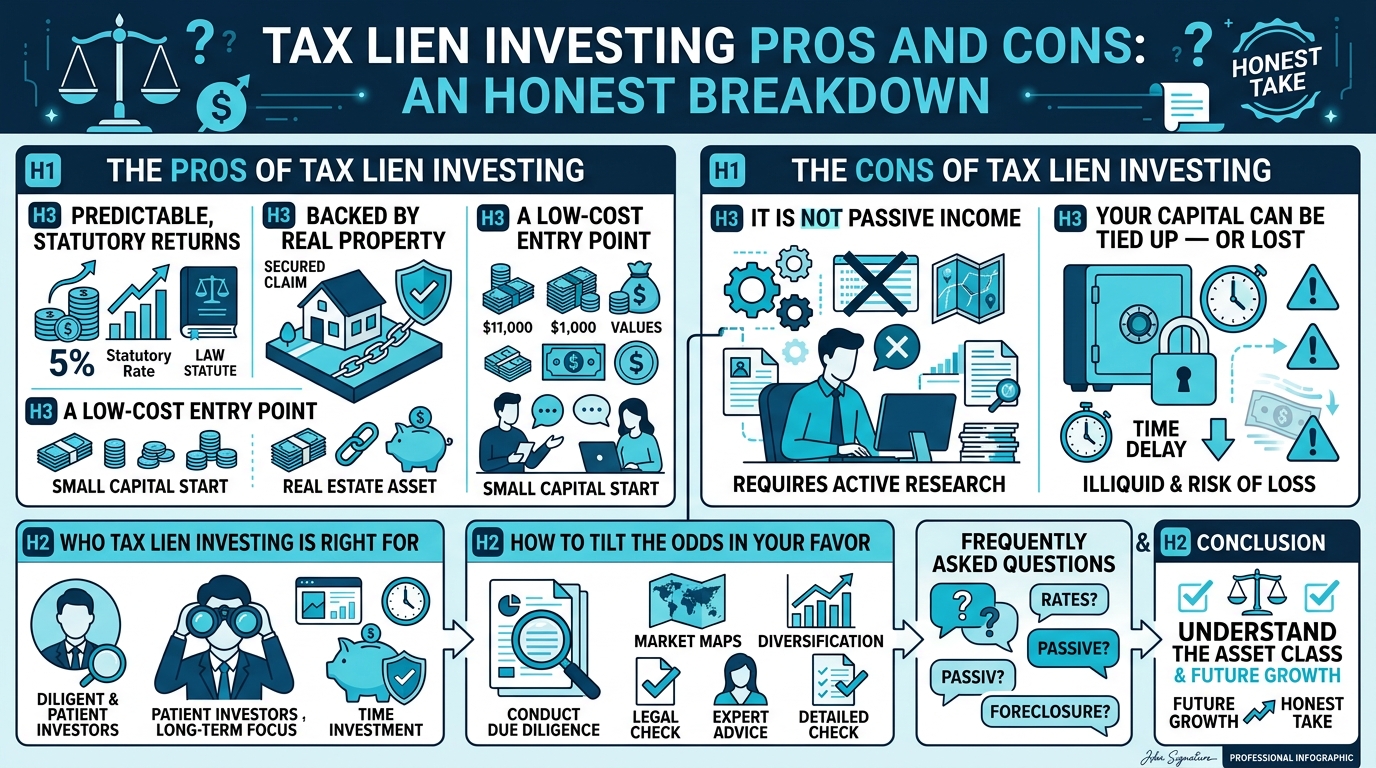
Tax Lien Investing: How to Buy Certificates, Properties, and Generate Returns

Tax Lien Investing: How to Buy Certificates, Properties, and Generate Returns

Tax lien investing is one of the few legal, government-backed strategies that lets you earn fixed interest — anywhere from 8% to 36% annually — without owning physical property. But the headline rate is not your return. Competition, auction formats, redemption timing, and the quality of the property behind the certificate all determine what you actually earn. This guide covers everything: how liens are created, how auctions work, how to research a property before you bid, what happens when an owner doesn't pay, and how to build a portfolio that compounds over time. No shortcuts. No fluff. Just the full picture.

· 83 min read