Over-the-Counter Tax Liens: How to Buy Liens Without an Auction
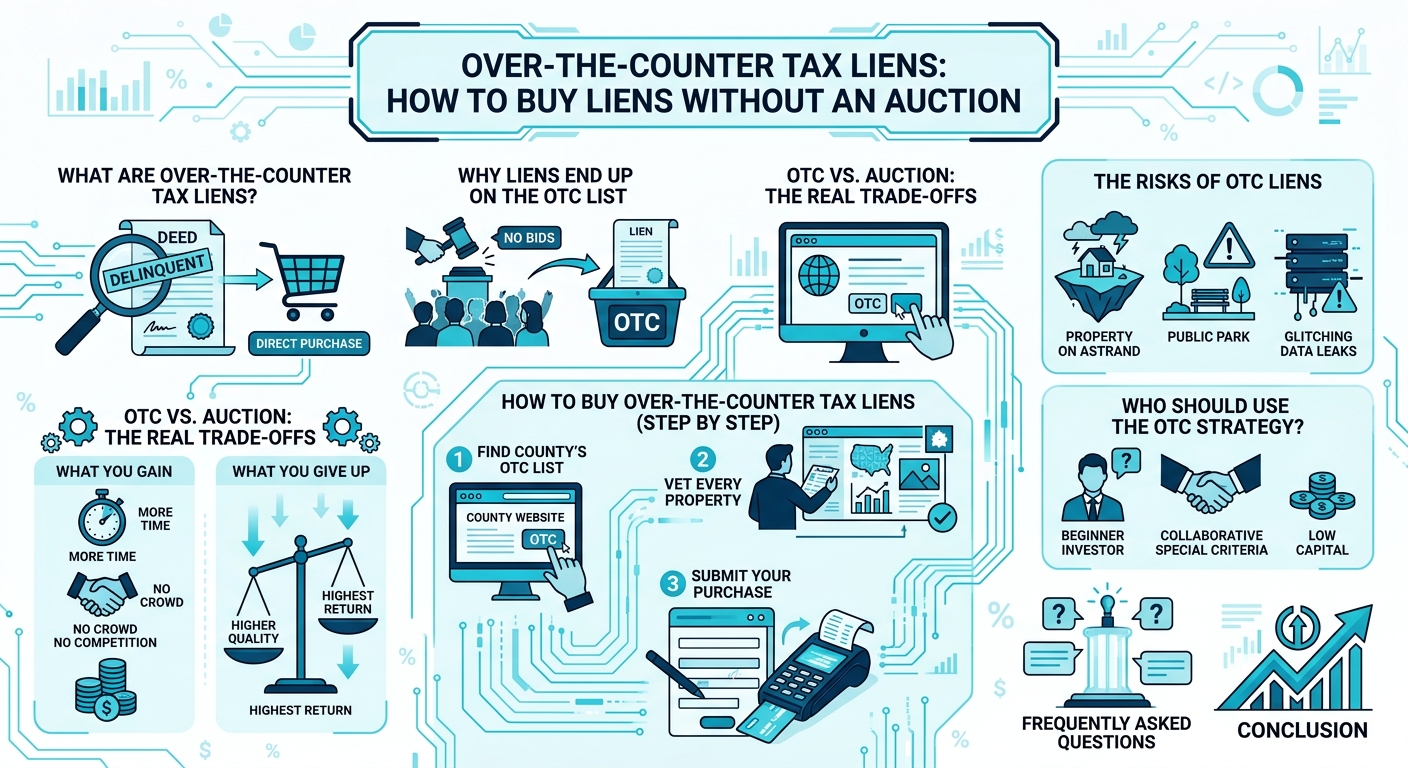
A practical guide to over-the-counter tax liens: what they are, why they exist, how they compare to auctions, how to buy them step by step, the risks, and who the strategy fits.
Expert insights, strategies, and tips from experienced tax lien investors.
Page 2 of 24
A practical guide to over-the-counter tax liens: what they are, why they exist, how they compare to auctions, how to buy them step by step, the risks, and who the strategy fits.
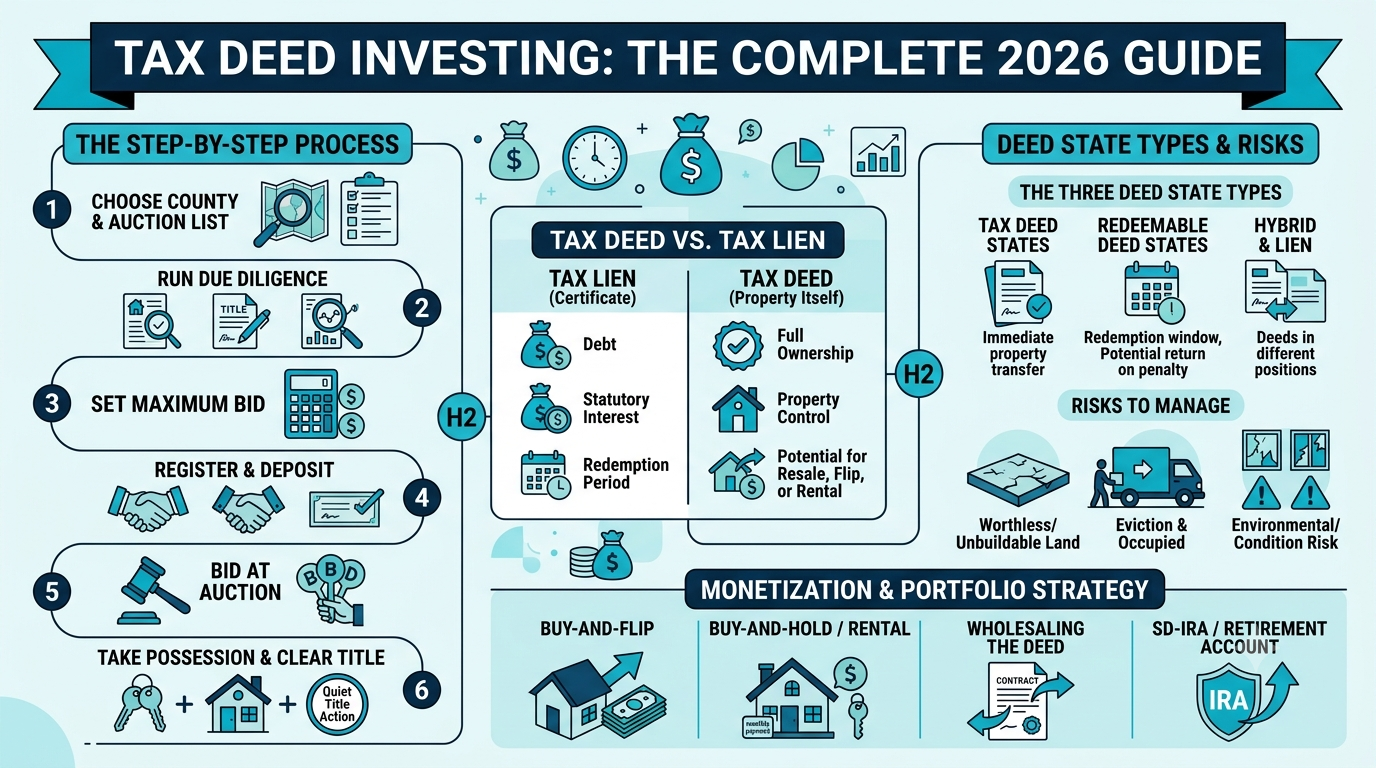
A complete, practical walkthrough of tax deed investing in 2026: how deed sales work, the three types of deed states, how investors profit, the full auction process, the risks, and how to build a repeatable strategy.
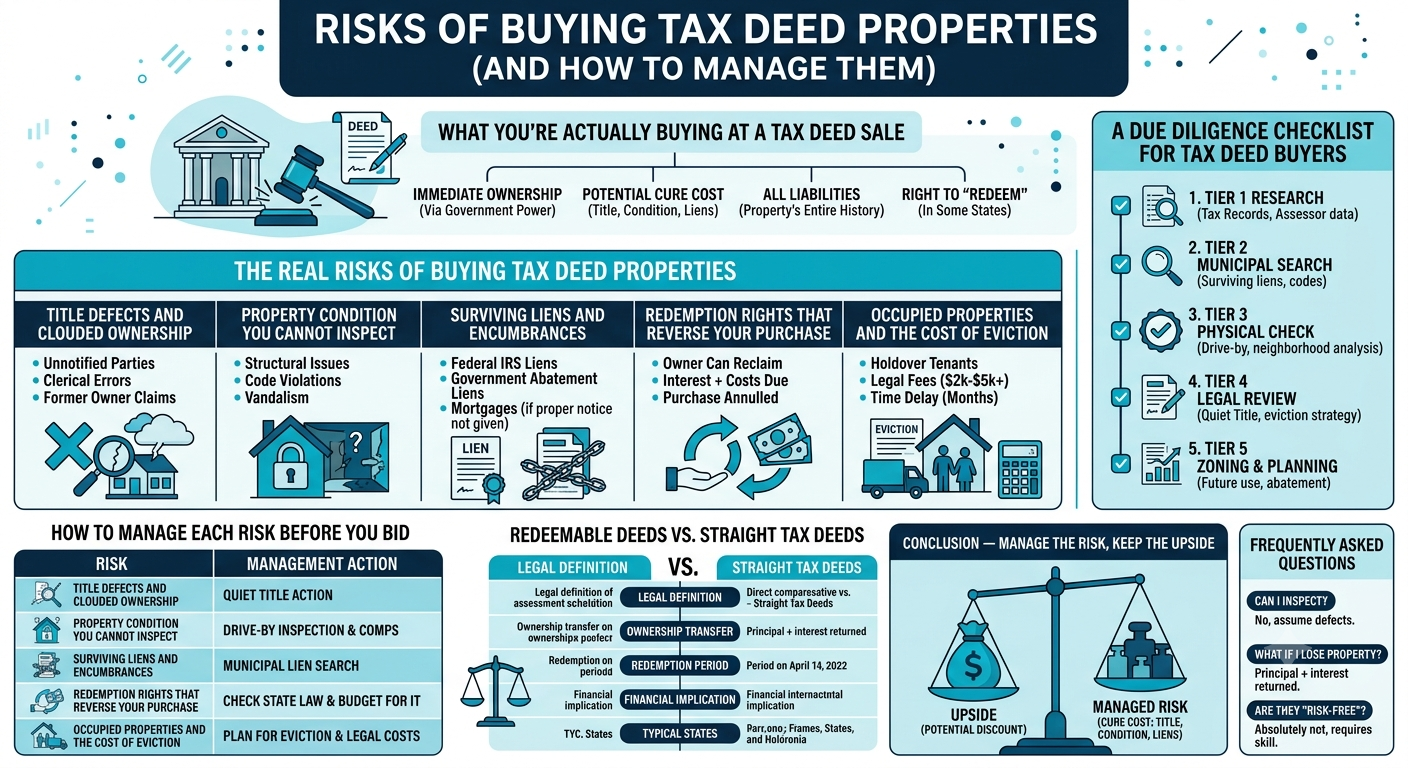
A practical breakdown of the five core risks in tax deed investing and how disciplined investors price and manage each one before the auction.
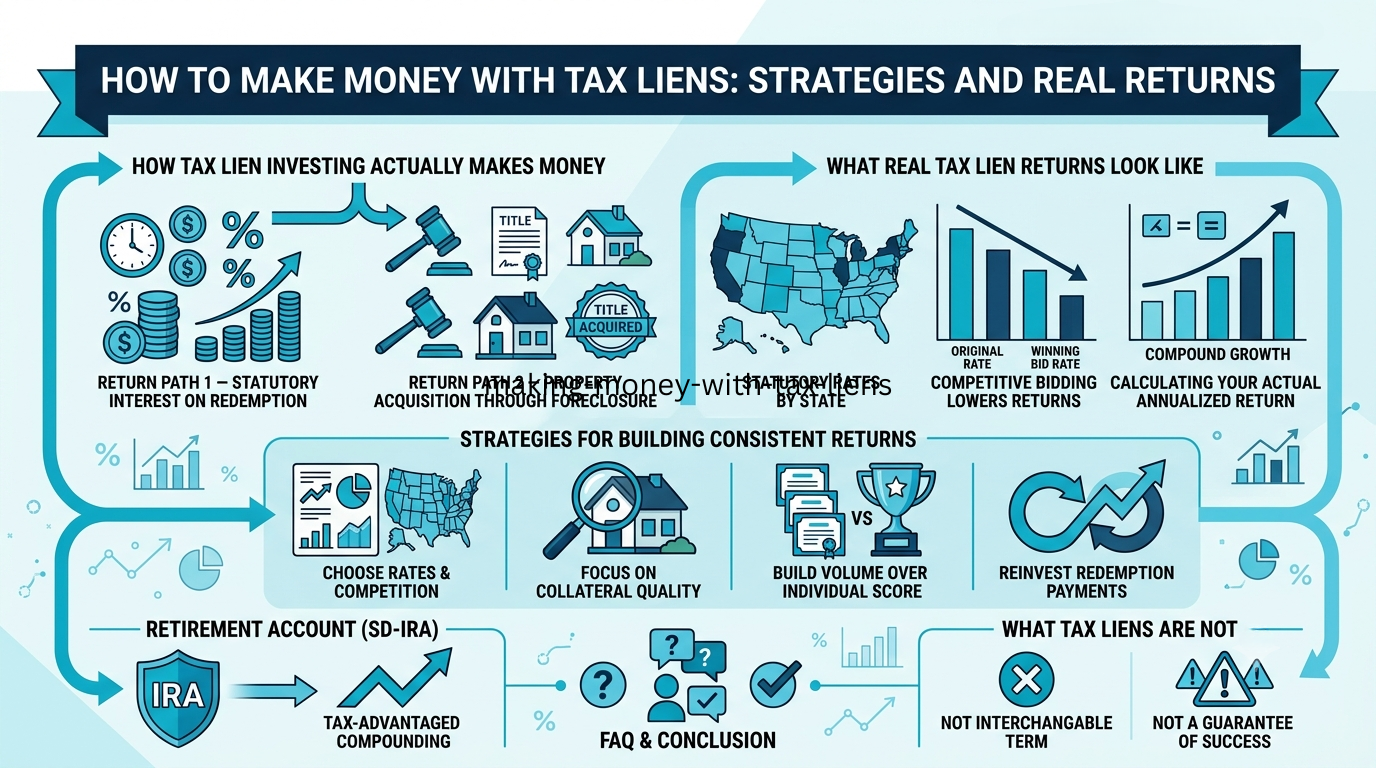
Tax lien investing generates returns through two primary paths: statutory interest when a property owner redeems a lien, and potential property acquisition when they do not. This guide explains both return paths, what real returns look like in practice, and the strategies investors use to build consistent income with tax lien portfolios.
Tax lien certificate auctions are public sales where investors bid on the right to collect delinquent property taxes. This guide explains auction formats, bidding strategies, preparation steps, and what determines whether you come away with a profitable certificate or overpay.
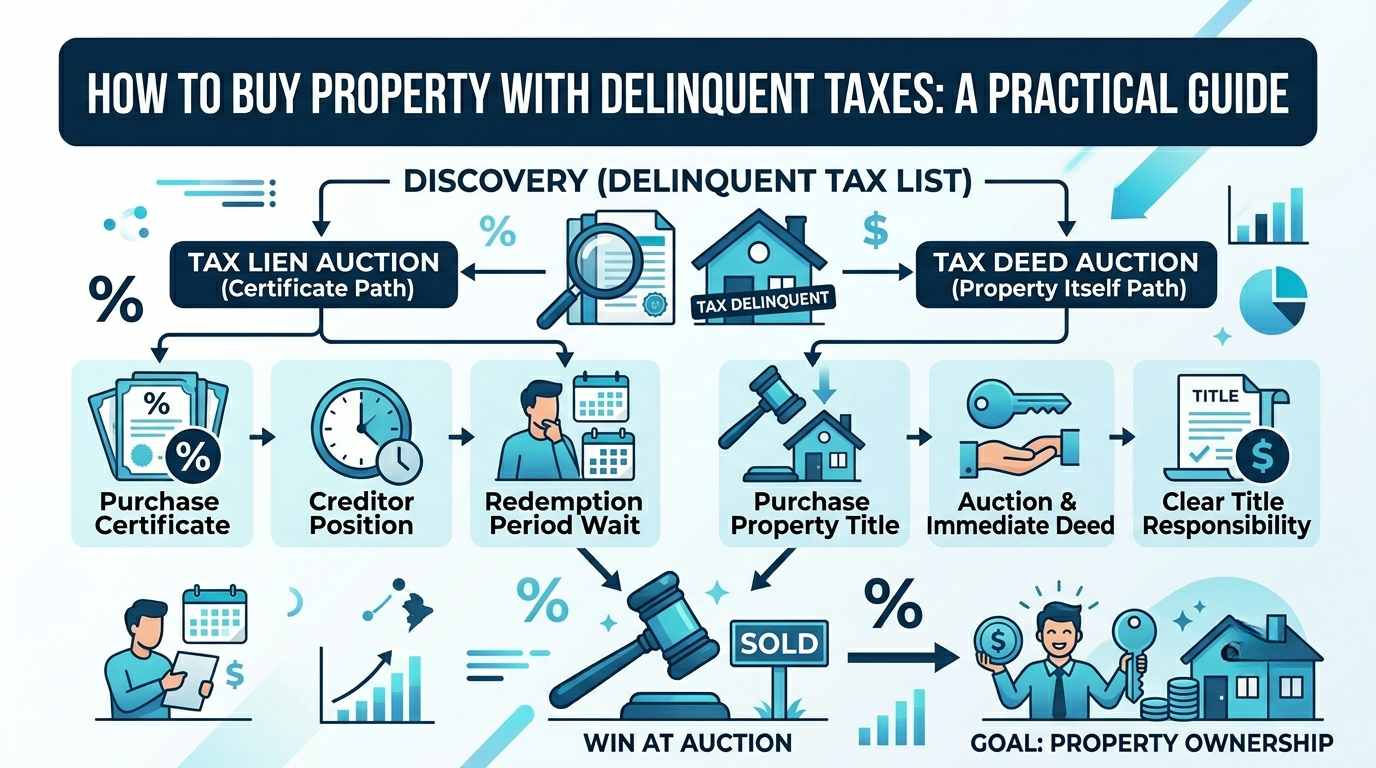
This guide explains exactly how to buy property through delinquent tax sales; covering both tax lien certificates and tax deed auctions, the step-by-step process, due diligence requirements, and what to expect after you win at auction.
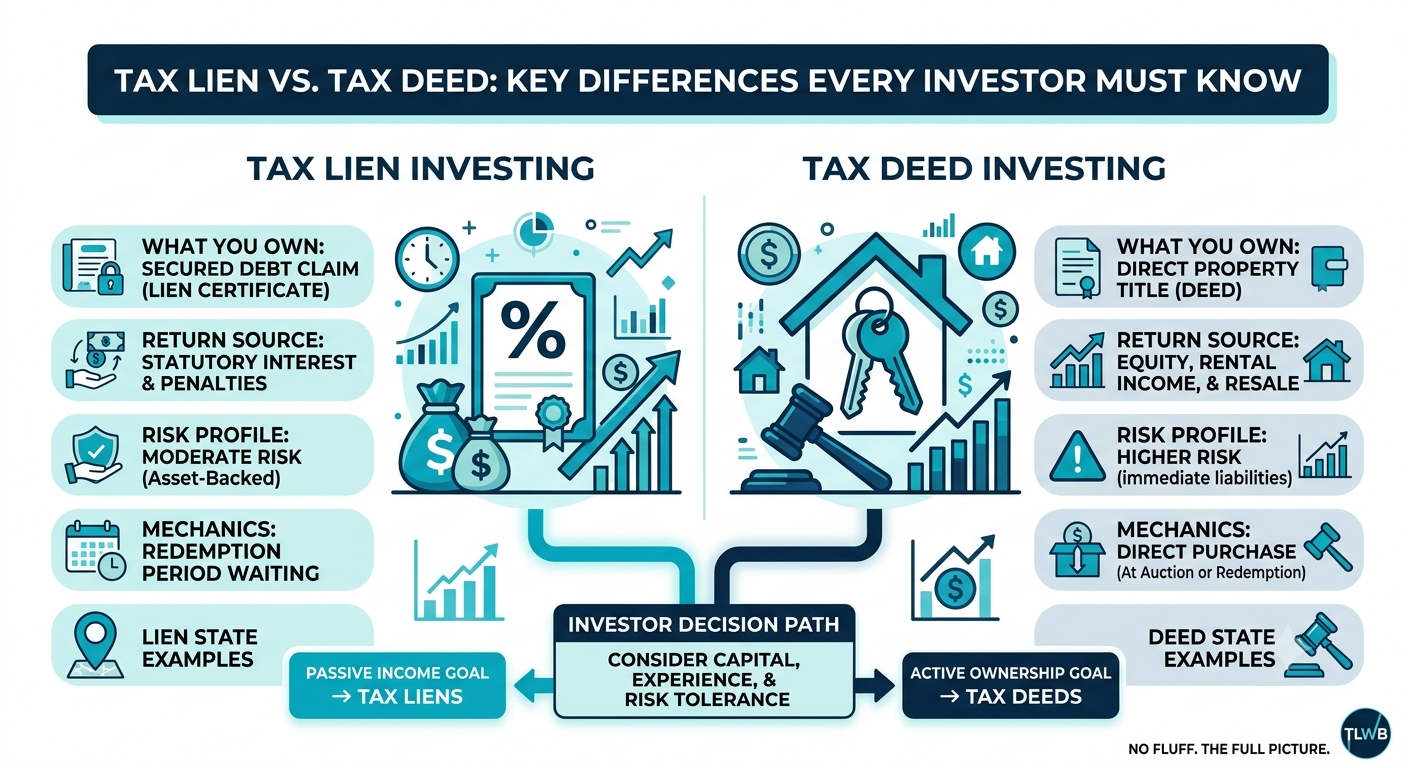
Both involve delinquent property taxes, both are government-backed, and both get misrepresented as if they were the same thing. They are not. This guide breaks down exactly how tax liens and tax deeds each work, where the differences matter most, which states offer which, and how to decide which strategy fits your capital, timeline, and goals.
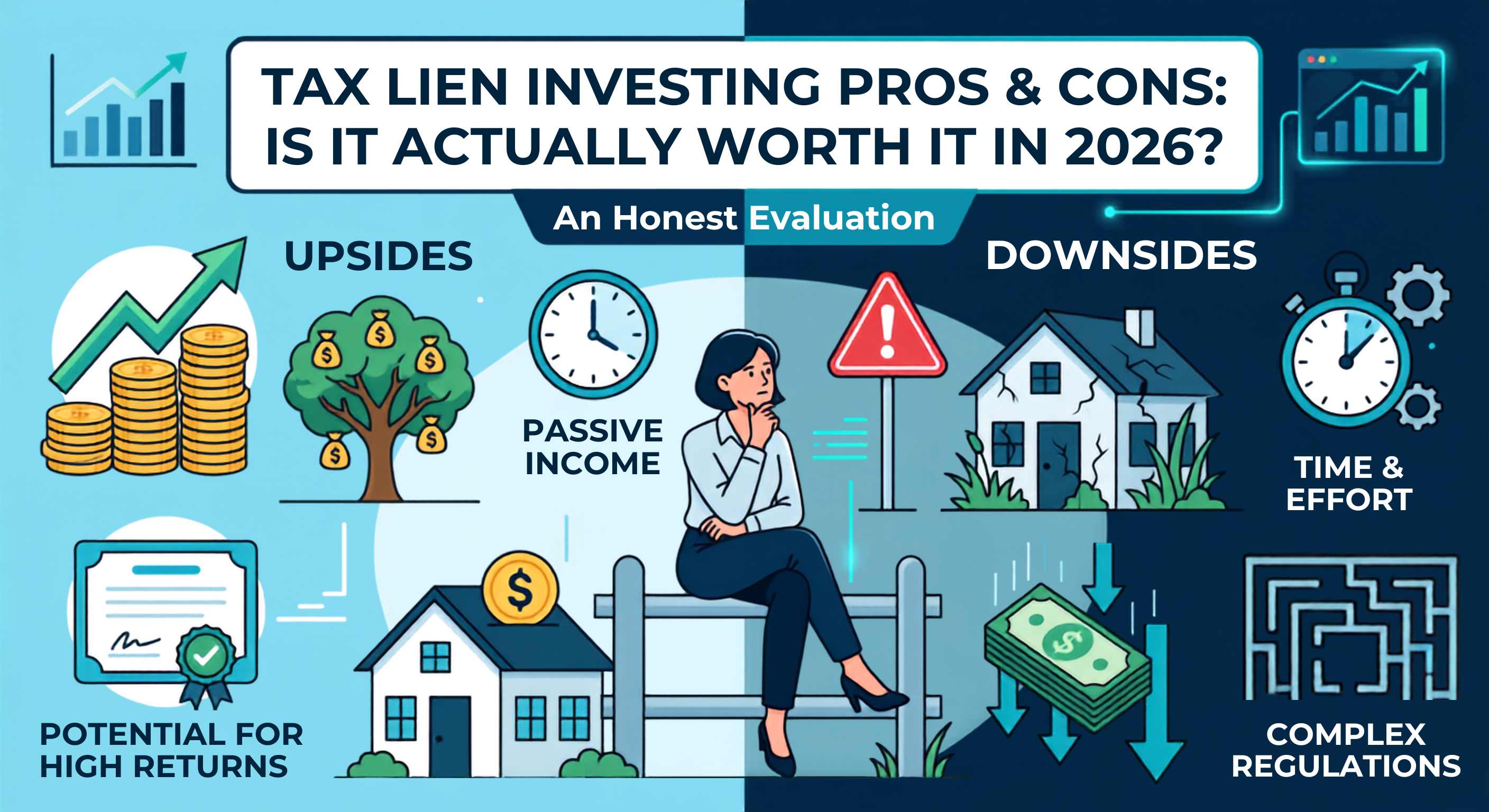
Every investment gets sold with the upside loud and the downside in fine print, and tax lien investing is no different. This article does the opposite, laying out the real pros and cons side by side: legally set returns and real-estate-backed security against locked-up capital and a heavy research burden, so you can decide whether it's the right strategy for you.
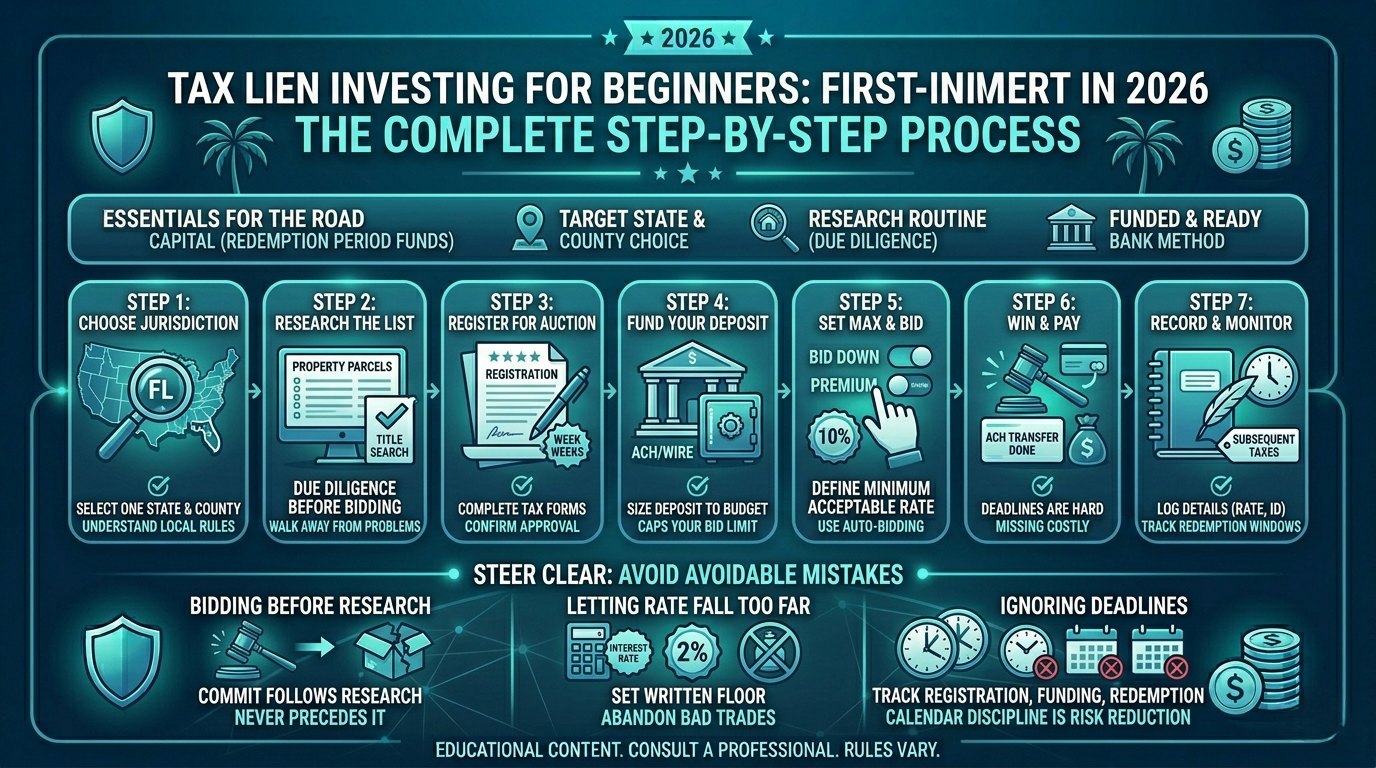
Knowing tax lien investing exists is one thing; placing your first bid is another. This step-by-step guide walks first-time investors through the full process, from choosing a state and researching parcels to registering, funding a deposit, bidding, and monitoring the certificate after you win.
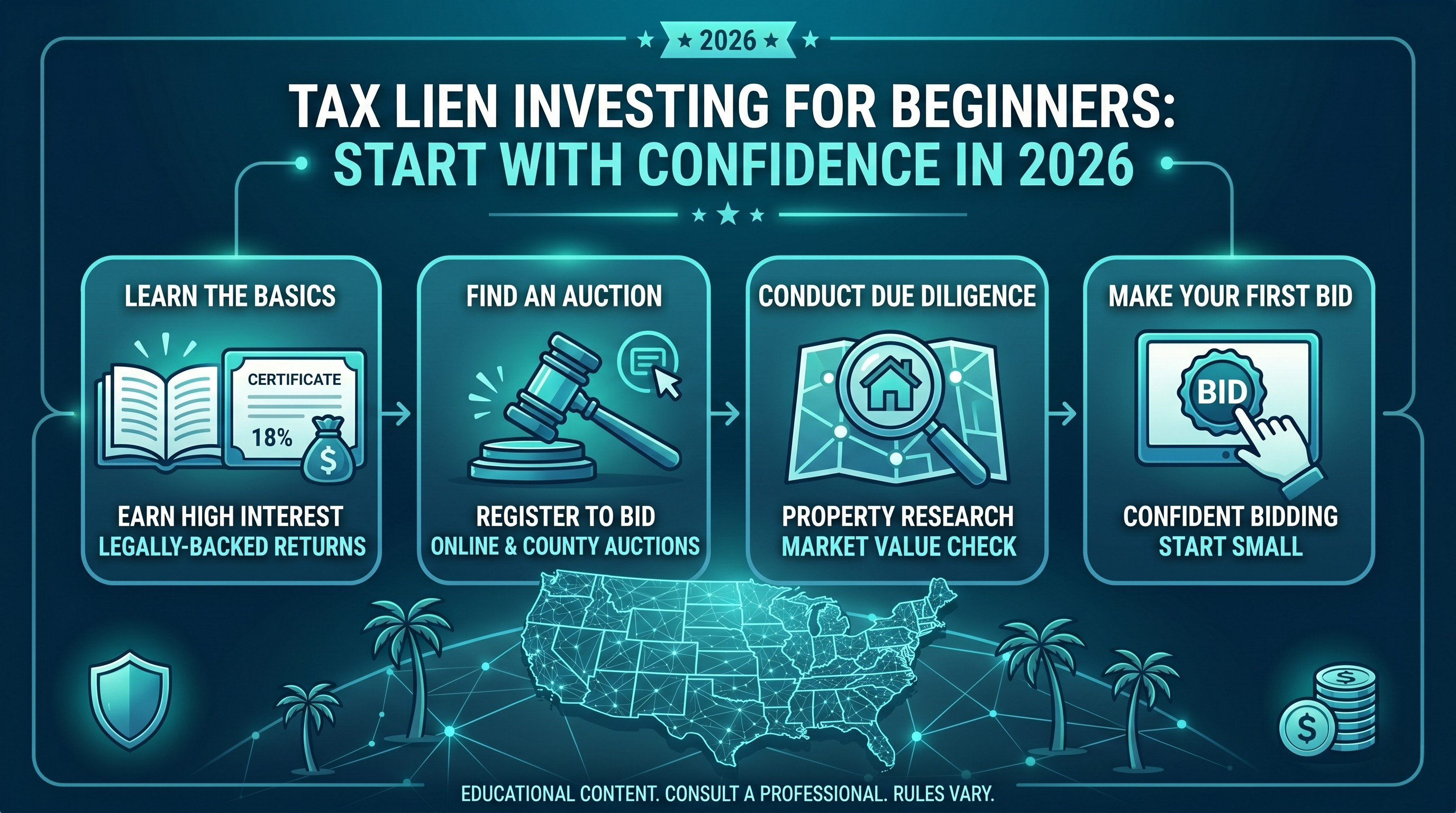
You can earn legally backed returns by paying other people's overdue property taxes, but the jargon scares most people off before they start. This guide explains what tax lien investing actually is, how the process works from auction to redemption, whether it's a good fit for your situation, and the five steps to make your first move with confidence.
The auction is where tax lien investing becomes real. Everything before it — the research, the screening, the property checks — leads to a single moment when you either win a certificate at a rate that makes financial sense or you walk away. Most first-time investors lose money not because they picked the wrong state or the wrong county, but because they showed up without a hard bid limit and let the auction decide for them. This guide covers how auctions actually work, the two bidding formats you'll encounter, and the preparation steps that determine your results before the sale even opens.