Page 3 of 24

Tax Lien Investing in Florida: 2026 Complete Guide

Tax Lien Investing in Florida: 2026 Complete Guide

A practical guide to tax lien investing in Florida: what a Florida tax certificate actually is, how the county certificate auctions work step by step, how to research a property before you bid, what happens when the owner does not redeem and the process moves toward a tax deed, and the risks and beginner mistakes to plan for.

· 21 min read
Tax Lien Auctions: How They Work and How to Win Your First One

Tax Lien Auctions: How They Work and How to Win Your First One

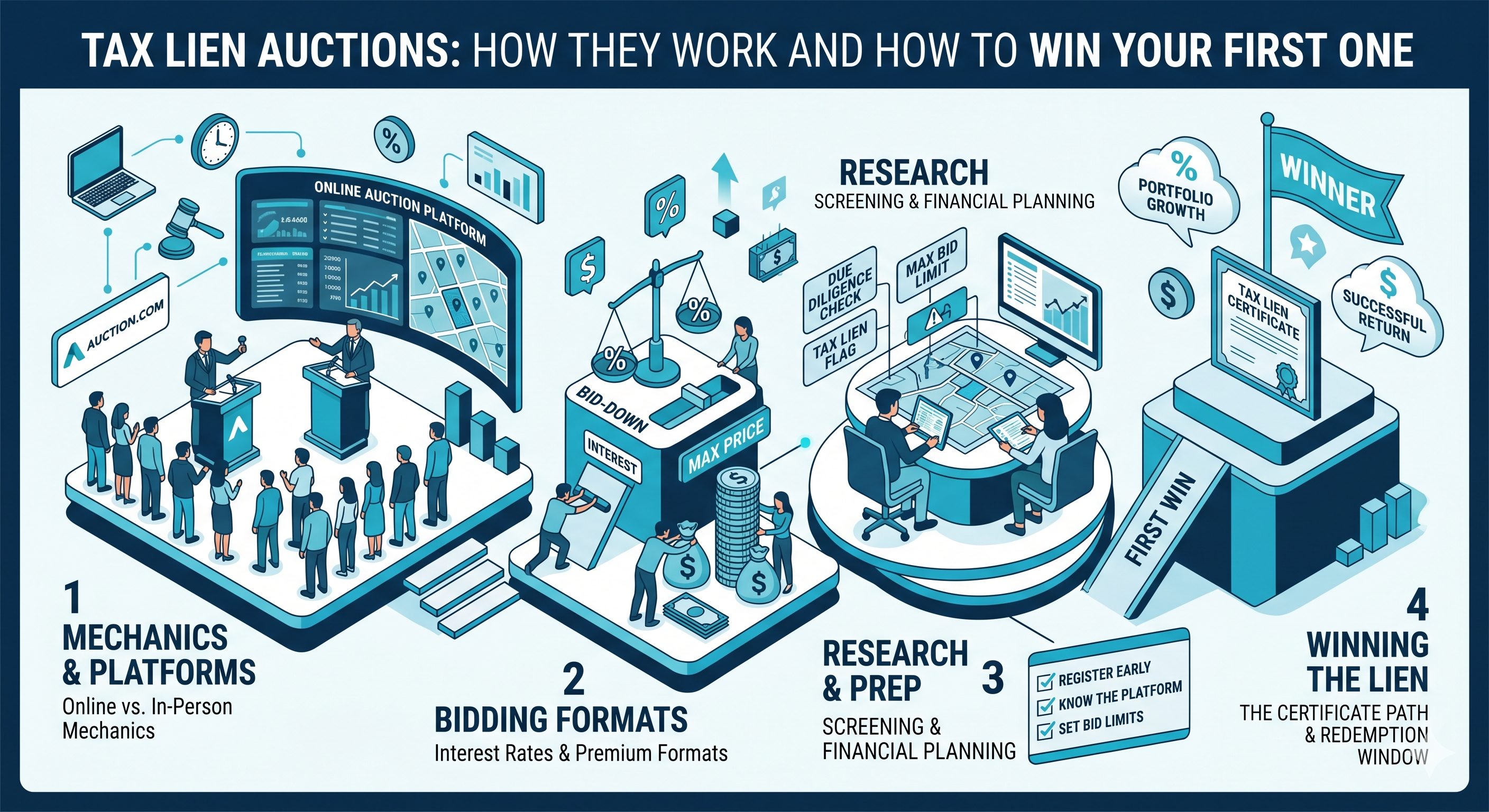
The auction is where tax lien investing becomes real. Everything before it — the research, the screening, the property checks — leads to a single moment when you either win a certificate at a rate that makes financial sense or you walk away. Most first-time investors lose money not because they picked the wrong state or the wrong county, but because they showed up without a hard bid limit and let the auction decide for them. This guide covers how auctions actually work, the two bidding formats you'll encounter, and the preparation steps that determine your results before the sale even opens.

· 10 min read
How to Find Tax Lien Properties: A Step-by-Step Guide for New Investors

How to Find Tax Lien Properties: A Step-by-Step Guide for New Investors

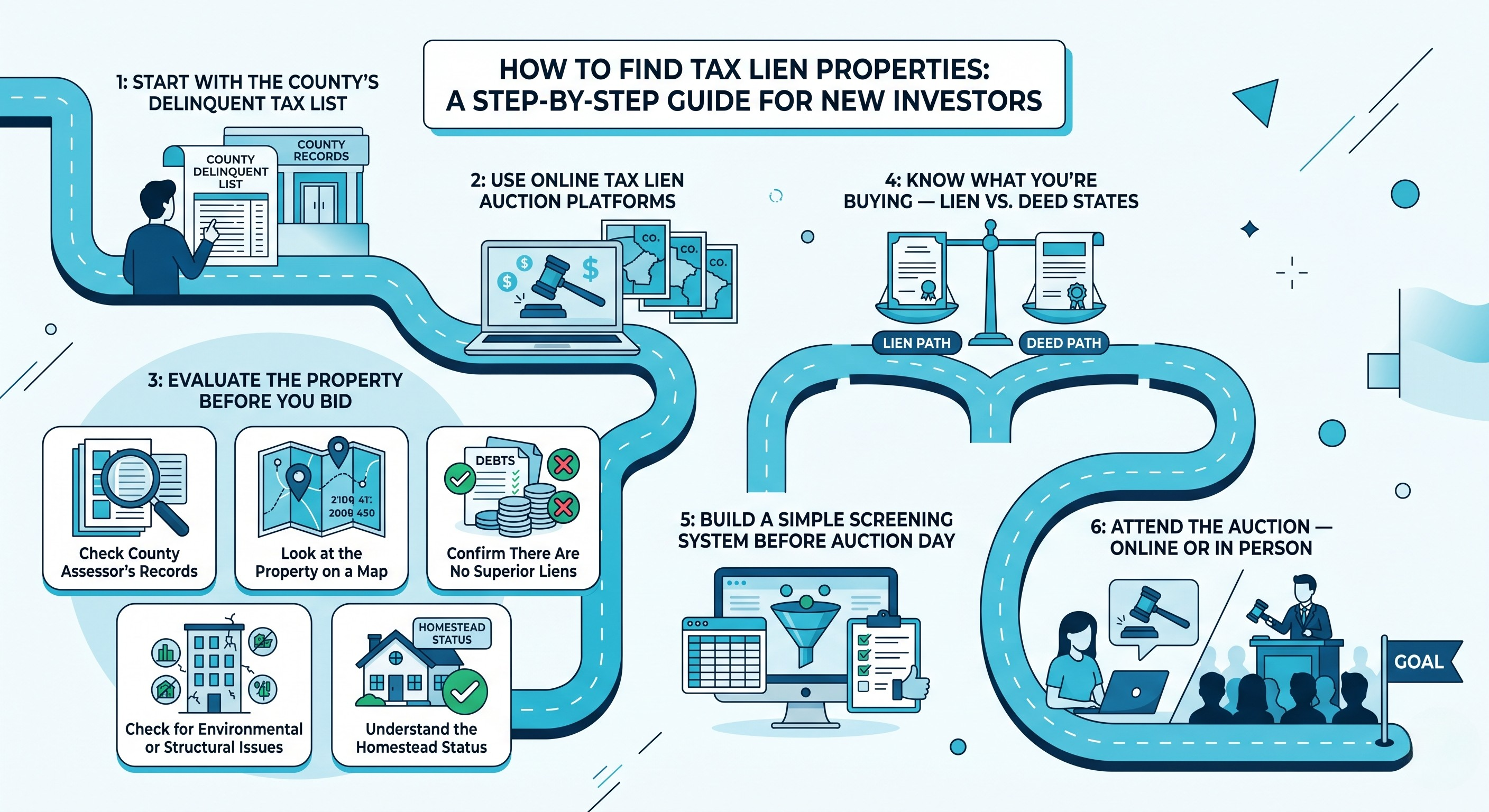
The certificates don't come to you. Most beginners spend weeks studying interest rates and redemption periods without ever answering the more immediate question: where do you actually find properties to bid on? This guide walks through the full process — from pulling the county's delinquent tax list to running a six-point property screen before auction day. By the end, you'll know exactly where to look, what to verify, and how to build a repeatable system that filters 200 properties down to the ones worth your capital.

· 10 min read
Best States for Tax Lien Investing in 2026: A Complete State-by-State Guide

Best States for Tax Lien Investing in 2026: A Complete State-by-State Guide

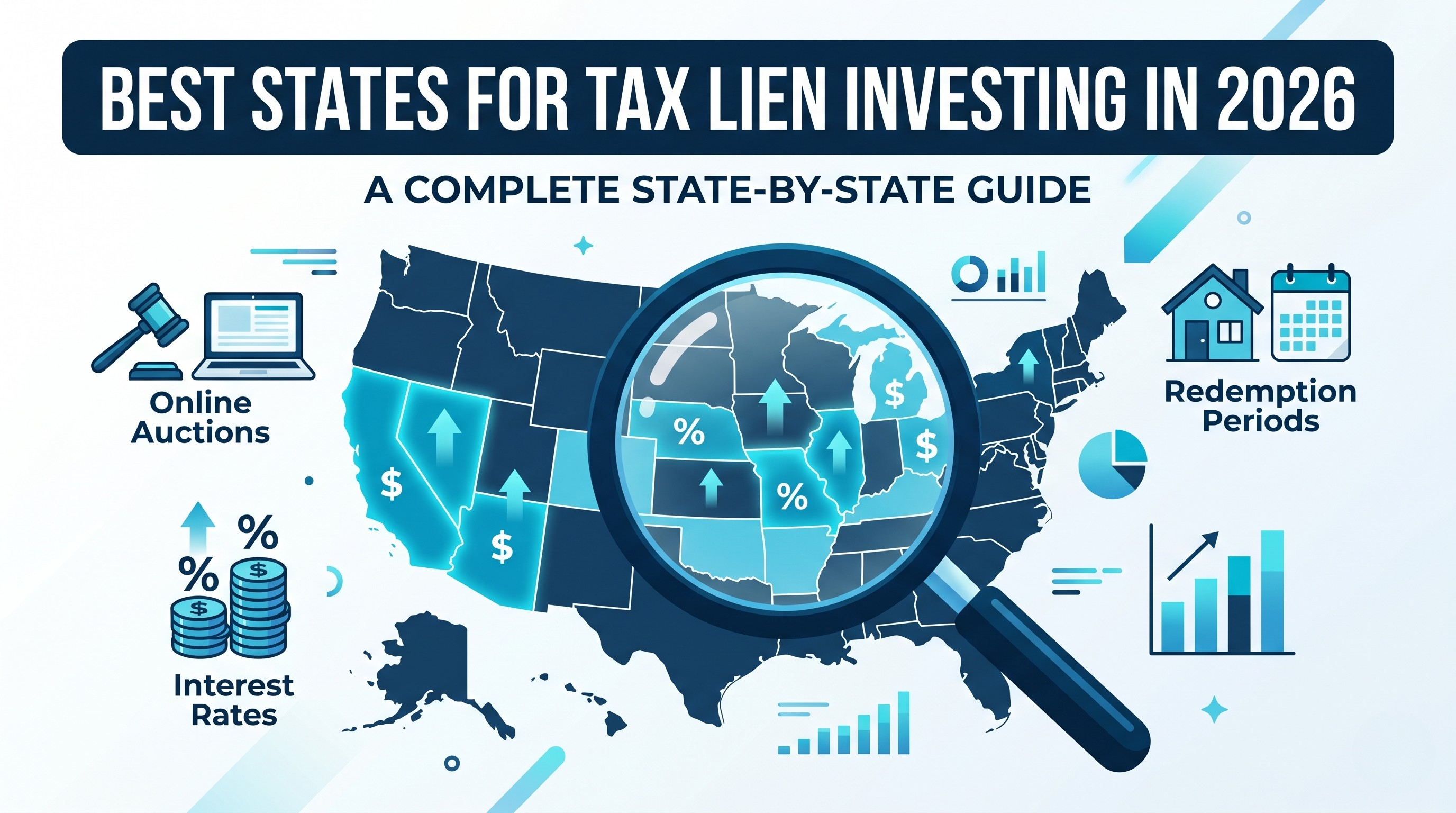
Not all tax lien states are created equal. Interest rates range from 8% to 36%. Redemption periods run from one year to three or more. Some states let you invest entirely online — others require you to show up at a county courthouse. The state you choose determines your return, your capital requirements, and how long your money stays locked in. This guide covers the seven strongest markets for 2026, breaks down the states to approach with caution, and includes a full reference table for every major lien and deed state in the country.

· 23 min read
Tax-Free Bonds: How They're Taxed, Who They're For, and How They Compare to Tax Lien Certificates

Tax-Free Bonds: How They're Taxed, Who They're For, and How They Compare to Tax Lien Certificates

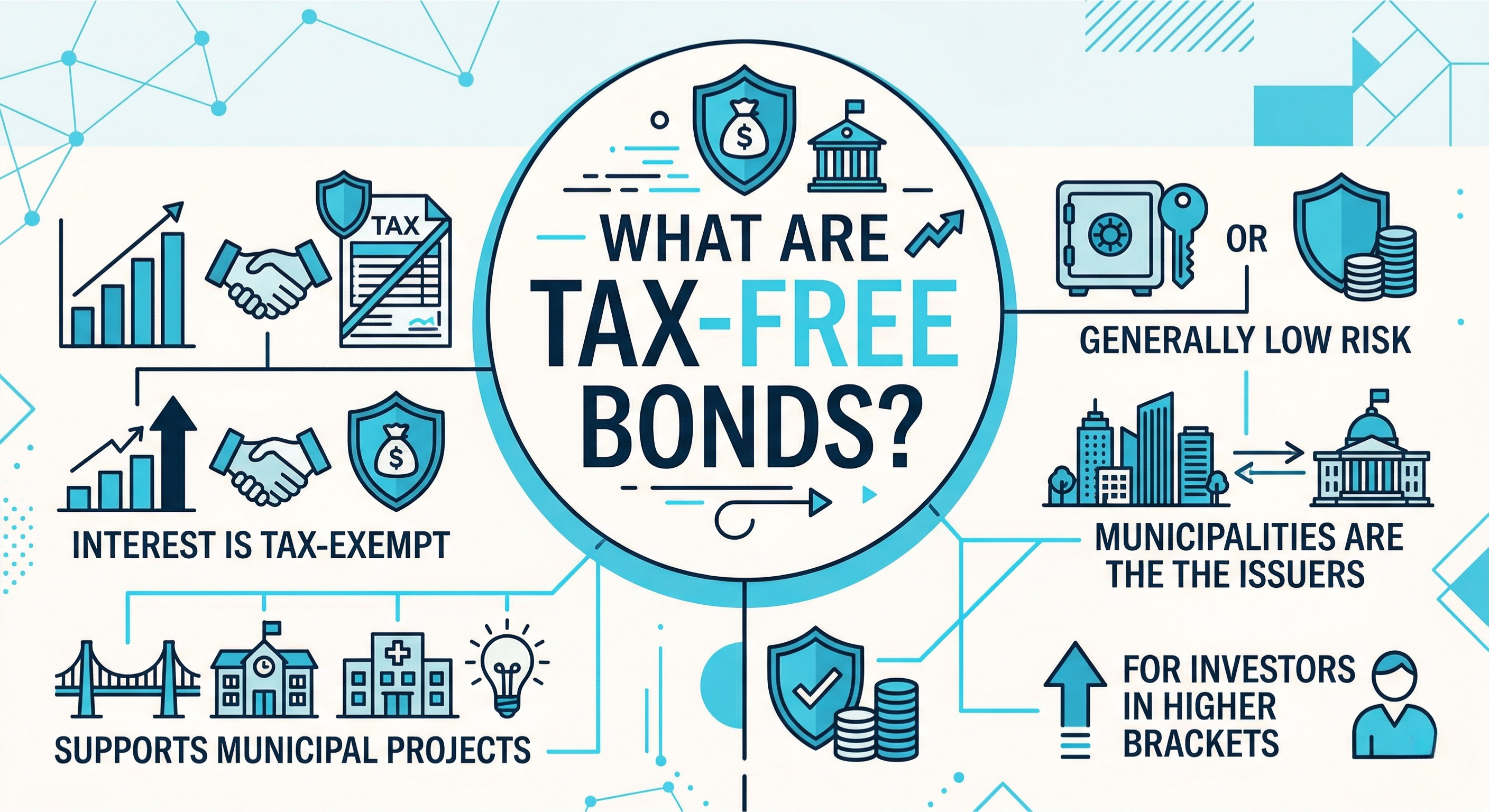
Tax-free bonds aren't always as tax-free as they sound. Municipal bonds skip federal income tax on interest — but capital gains are fully taxable, some bonds trigger the AMT, and out-of-state munis get taxed by most states. This guide breaks down exactly how each bond type is taxed, who they actually make sense for, and why most bond investors have never seriously looked at the alternative: tax lien certificates paying 8–36% annually, backed by the same government authority.

· 10 min read
Tax Lien and Tax Deed Investing: What They Are, How They Differ, and Where to Start

Tax Lien and Tax Deed Investing: What They Are, How They Differ, and Where to Start

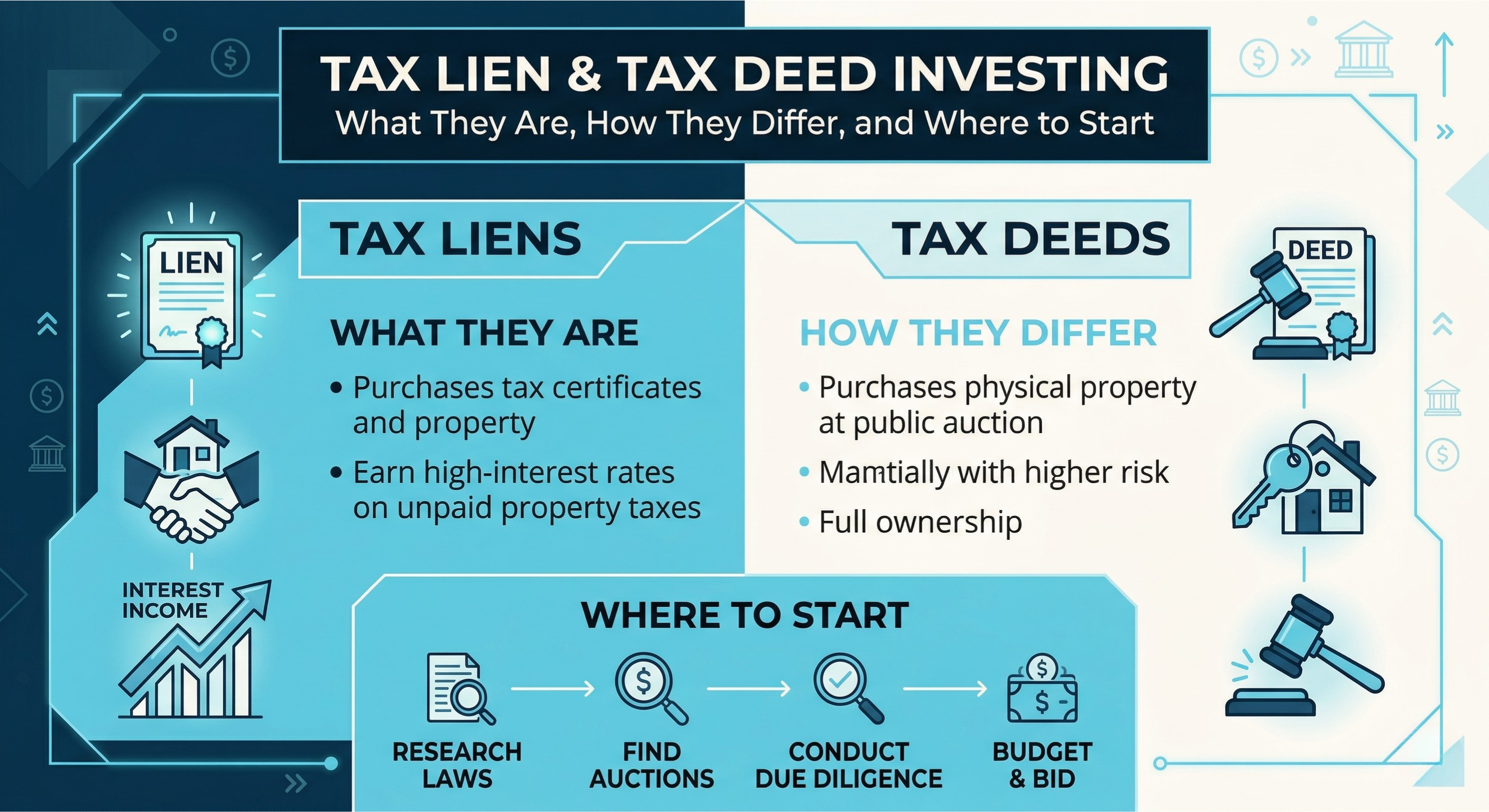
Tax lien and tax deed are two of the most misunderstood terms in real estate investing. Most beginners treat them as the same thing — they're not. One lets you buy the debt on a property and earn government-backed interest. The other transfers full ownership after a public auction. Different mechanics, different risk profiles, different capital requirements. This guide breaks both down clearly so you can decide where to start.

· 10 min read
Tax Lien Investing: How to Buy Certificates & Properties

Tax Lien Investing: How to Buy Certificates & Properties

Tax lien investing lets you earn interest set by state law on unpaid property taxes, without owning the property. But the statutory rate is not your return. Competition, auction format, redemption timing and the property behind the certificate all shape what you actually earn. This guide covers how liens are created, how auctions work, how to research a property before you bid, what happens when an owner doesn’t pay, and how to build a portfolio with realistic expectations.

· 84 min read