
Whether you're a first-time buyer, a real estate investor, or someone who just inherited a property, this process is the same. It's not complicated, but it does require knowing where to look. And the good news: most of it is free.
New to tax liens? Before you search for liens on a property, it helps to understand what tax liens actually are and why they exist. Visit the Tax Lien Wealth Builders blog for a plain-English breakdown of the basics. |
What Is a Lien, Exactly?
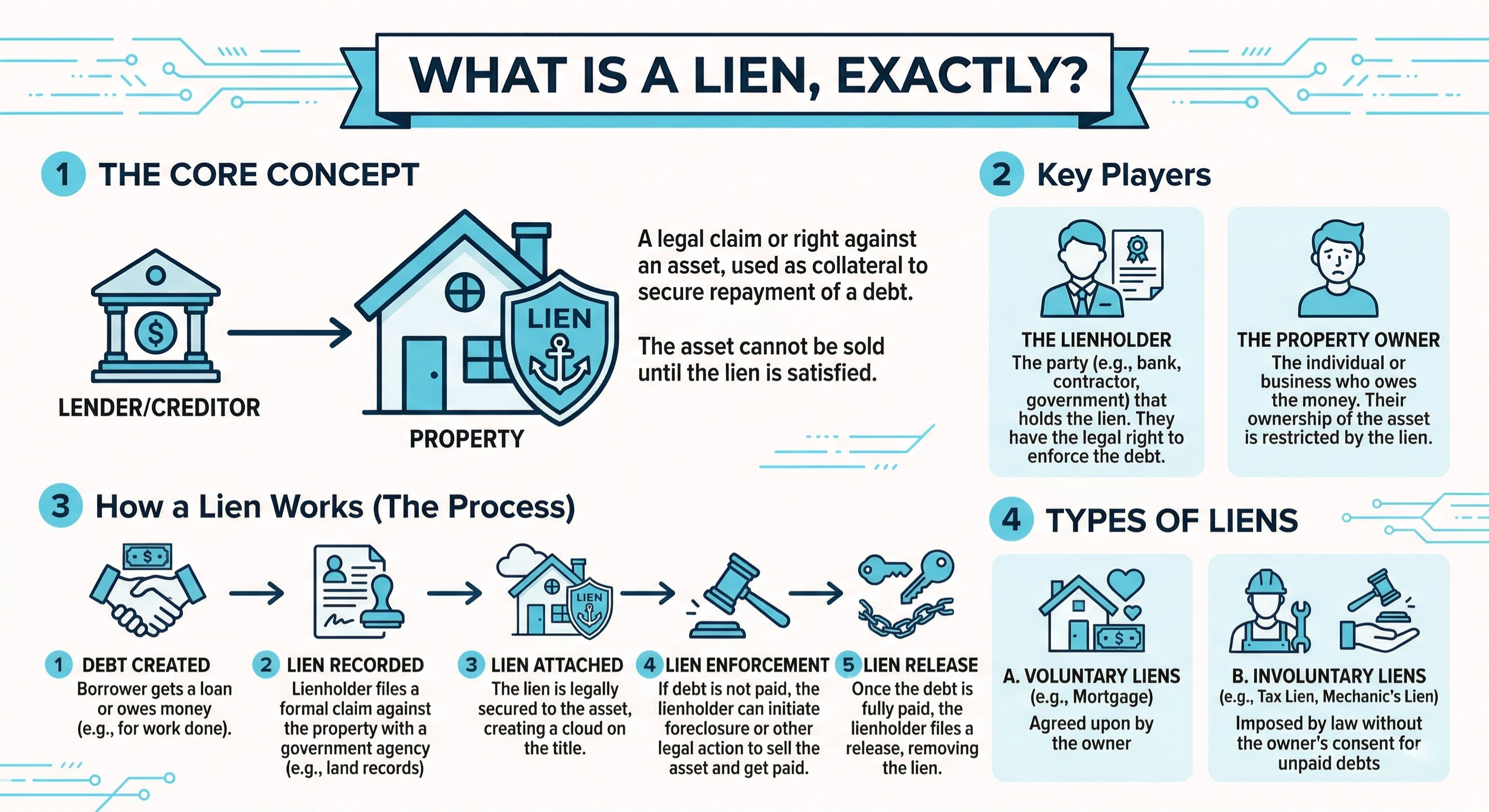
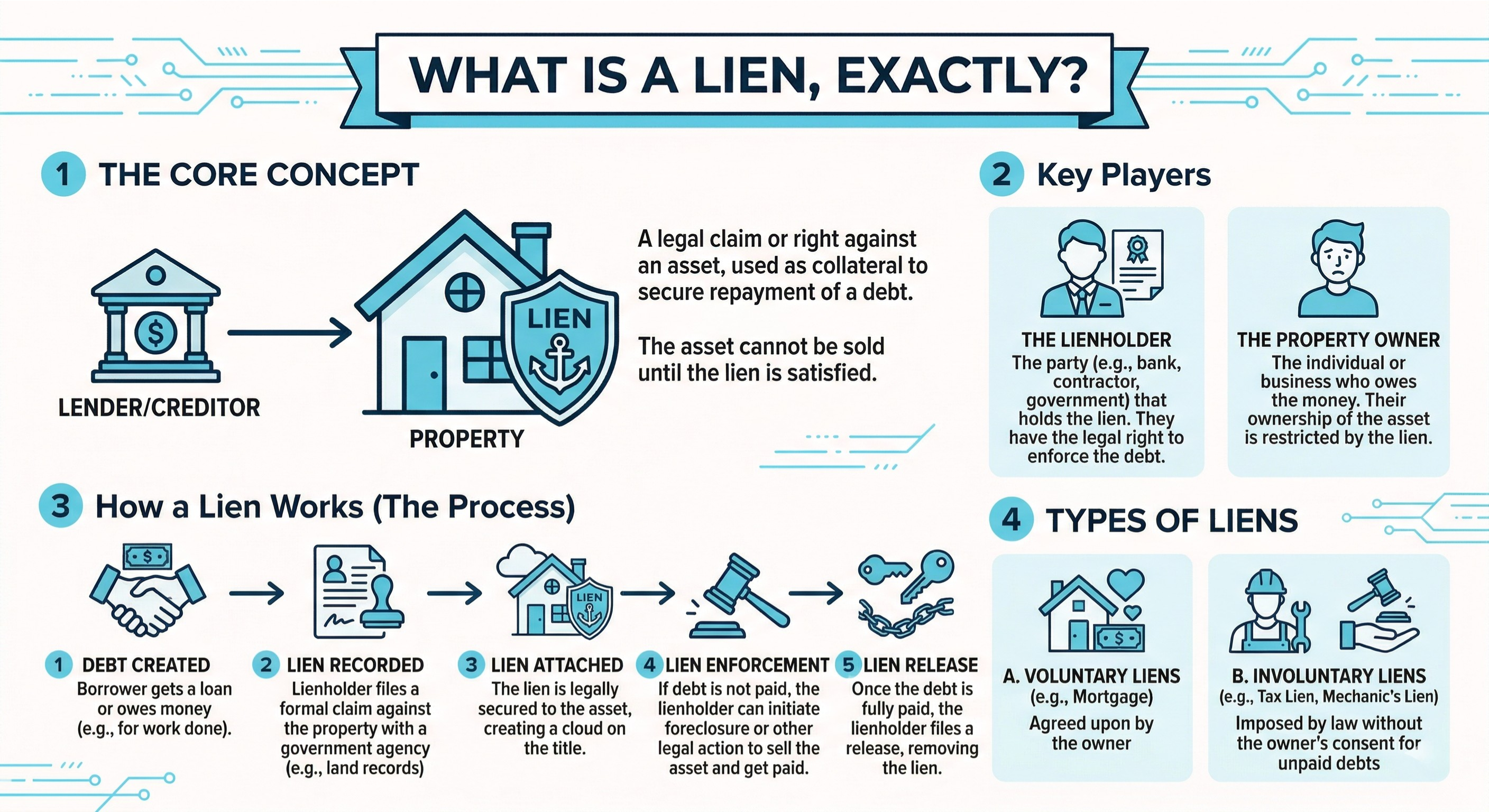
Let's define lien clearly before we move on: a lien is a legal right or claim a creditor holds against a property until the debt tied to it is paid. It attaches to the real estate itself — not just the person who owes. That's what makes it a problem when buying. You can research what lien on property means in depth at United Tax Liens, but here's the short version: a lien follows the property, not the owner.
The Most Common Types of Liens
Not all liens are created equal. Some are routine; others are serious red flags. Here's what you're likely to encounter:
Mortgage Liens
Mortgage liens are the most common. When someone borrows money to buy a home, the lender places a mortgage lien against the property as security. If the loan is fully paid off, it should be released — but sometimes it isn't, and you need to verify that release exists in the public record.
Tax Liens
A tax lien is placed by a government entity (federal, state, or local) when a property owner fails to pay taxes. A local property tax lien attaches to the specific parcel. A federal tax lien is broader and can attach to all of the taxpayer's property and rights to property. In most states, local property tax liens take priority over other creditors. Our guide to what a tax lien is explains how they work.
Mechanic's Liens
Contractors, subcontractors, and suppliers who weren't paid for work done on a property can file a mechanic's lien. These can show up weeks or even months after the work was completed, which means you could buy a property and receive a lien filed after closing.
Judgment Liens
If someone sues a property owner and wins in court, the court can attach a judgment lien to any real estate they own. These come from entirely unrelated debts — a car accident, a business dispute — and they stick to the property.
How to Find a Lien on a Property: Step-by-Step
Step 1: Start With the County Recorder
In the U.S., all liens against real property are recorded at the county level — specifically with the County Recorder's Office (sometimes called the Register of Deeds). This is the most authoritative source of lien information on property, and in most counties, it's accessible online for free.
Here's how to access it:
Search for "[County Name] County Recorder" or "[County Name] Register of Deeds"
Look for a property search tool — usually searchable by owner name or parcel number (APN)
Pull the full chain of title to see every document recorded against that property
Look for deeds of trust, lis pendens notices, federal tax liens, and any unresolved judgments
This is your baseline. If something shows up here, it's real. If a seller claims a lien was resolved but you don't see a release document recorded, it's not legally cleared.
Step 2: Search for Federal Tax Liens Separately
Federal tax liens filed by the IRS are recorded differently than local ones. The IRS files them with the county, but they can sometimes lag. The most reliable way to look up liens on property involving federal taxes is to check directly with the county clerk and also run the owner's name through the IRS Centralized Lien Operation (available by phone) or through a title searchAn examination of public records to verify a property's legal ownership and identify any liens, encumbrances, or other claims that may affect the title..
You can also use the PACER federal court database to search for any federal judgments that may have converted into liens.
Step 3: Use Free Online Property Search Tools
Several platforms let you search for liens on property free of charge. These aren't always 100% up to date, but they're a fast first pass:
Zillow: sale and tax history only, so it will not show most liens
Realtor.com : basic property data, useful for cross-referencing
ATTOM Data Solutions : more detailed lien and deed data (partially paid)
Your state or county assessor website : often free and updated regularly
These tools give you lien information on property at a surface level. Think of them as a starting point, not a final answer.
Step 4: Order a Preliminary Title Report
If the property is worth buying, it's worth the cost of a preliminary title report. A title company searches public records on your behalf and compiles a full picture of what's attached to the property — including liens, easements, encroachments, and encumbrances. This is how to check for liens on a property with real certainty.
Expect to pay $150–$400 depending on your state. For any serious acquisition, this is non-negotiable.
Step 5: Check Court Records for Judgment Liens
Judgment liens won't always show up immediately in county recorder searches. You may need to look at state court records separately, especially if the judgment was entered in a different county than where the property sits.
Most state court systems have an online search — search "[State] court records search" to find it. Run the property owner's full legal name and look for any civil judgments in the past 10 years.
Already investing in real estate? Tax lien certificates can pay interest set by state law, which varies widely and is not guaranteed, on properties with delinquent taxesProperty taxes that remain unpaid past the due date, which may result in penalties, interest, and eventually a tax lien being placed on the property.. Learn how the model works at Tax Lien Wealth Builders. |
How to Tell If a Property Has a Lien: Warning Signs
Sometimes you don't even need to dig that deep — there are surface-level signs that suggest a property may be encumbered:
The seller is unusually resistant to title insurance or an escrow hold
There are unpermitted additions or recent contractor work on the property
The property has changed hands multiple times quickly
The owner has visible financial distress (foreclosureThe legal process by which a lienholder forces the sale of a property to recover the debt owed when the property owner fails to pay. notices, eviction records)
There's a notice of lis pendens (active lawsuit) in the public record
None of these are automatic dealbreakers, but each warrants a closer look. If you're asking how to know if a house has a lien, these signals are your early warning system.
Is There a Lien on My House? How to Check Your Own Property
If you're a homeowner wondering whether your own property is encumbered, you have full access to the same public record tools. Visit your county recorder's website, search by your name or property address, and download any recorded documents.
Common reasons homeowners discover unexpected liens on their homes:
A contractor filed a mechanic's lien after a renovation dispute
A judgment was entered in an old lawsuit they thought was resolved
An old mortgage payoff was never formally released in the public record
An IRS tax lien was filed for a year they disputed but didn't fully resolve
If you find something unexpected, don't panic. Many liens can be resolved — but you need a real estate attorney to help you navigate that process.
Curious how investors profit from unpaid tax liens? The United Tax Liens team walks you through the full investment process — from how liens are auctioned to how you collect. Read real investor stories at United Tax Liens testimonials. |
How to Place a Lien on a Property (When You're the One Owed Money)
This section is for contractors, creditors, or anyone trying to understand how a lien gets filed — not just found. If someone owes you money for work done on their property, you may have the right to file a mechanic's lien to protect yourself.
The General Process for Placing a Lien
The process varies by state, but the general framework is:
Send a preliminary notice (required in most states before any work begins or within a set window after)
Document the unpaid debt — invoices, contracts, and correspondence
File a lien claim with the county recorder within the statutory deadline (often 90 days after last work)
Serve the property owner with formal notice
Enforce the lien by filing suit if the debt remains unpaid within the enforcement window
How to put a lien on a property is a legal question with state-specific answers. Consult an attorney — filing improperly can void your claim entirely. Resources like Nolo's lien guide are a good starting point.
What Is a Specific Lien?
A specific lien attaches only to a particular piece of property — as opposed to a general lien, which attaches to everything a person owns. Mortgage liens and local property tax liens are specific liens. Federal tax liens are general liens. Judgment liens can become general liens depending on the state.
Understanding this distinction matters when you're assessing how much a lien threatens a property deal. A specific lien on one parcel doesn't follow the owner to their other assets — but it absolutely follows the property.
What to Do If You Find a Lien
Finding a lien doesn't automatically kill the deal. It changes the deal. Here's how to respond:
Verify the Lien Is Still Active
Liens expire. Some states set a statute of limitations — often 5–10 years — after which a lien becomes unenforceable even if it's still recorded. A title attorney can tell you whether what you found is legally active or effectively dead.
Negotiate a Payoff at Closing
The most common solution: require that the seller pay off the lien from their proceeds at closing. The title company holds the funds in escrow, pays the lienholder, and records a release. This is standard procedure — you don't need to walk away just because a lien exists.
Request a Lien Release or Subordination
If the lienholder is willing, they may agree to release the lien outright (if they accept a settlement) or subordinate it (move it to a lower priority position). Both options require a written agreement recorded in public records.
Walk Away If the Numbers Don't Work
Sometimes the liens exceed the equity. Sometimes the seller won't negotiate. Sometimes the lien is contested and there's active litigation you don't want to inherit. In those cases, the most disciplined move is to pass.
When a Lien Is Actually an Opportunity
Most people researching liens are trying to avoid them. But there's a category of investors who actively seek them out. Tax lien investing is built on exactly this premise: municipalities sell the right to collect delinquent tax liens to investors, who earn interest at a rate set by state law while the property owner has a redemption periodThe legally defined timeframe during which a property owner can reclaim their property by paying the delinquent taxes plus interest and penalties. to pay up.
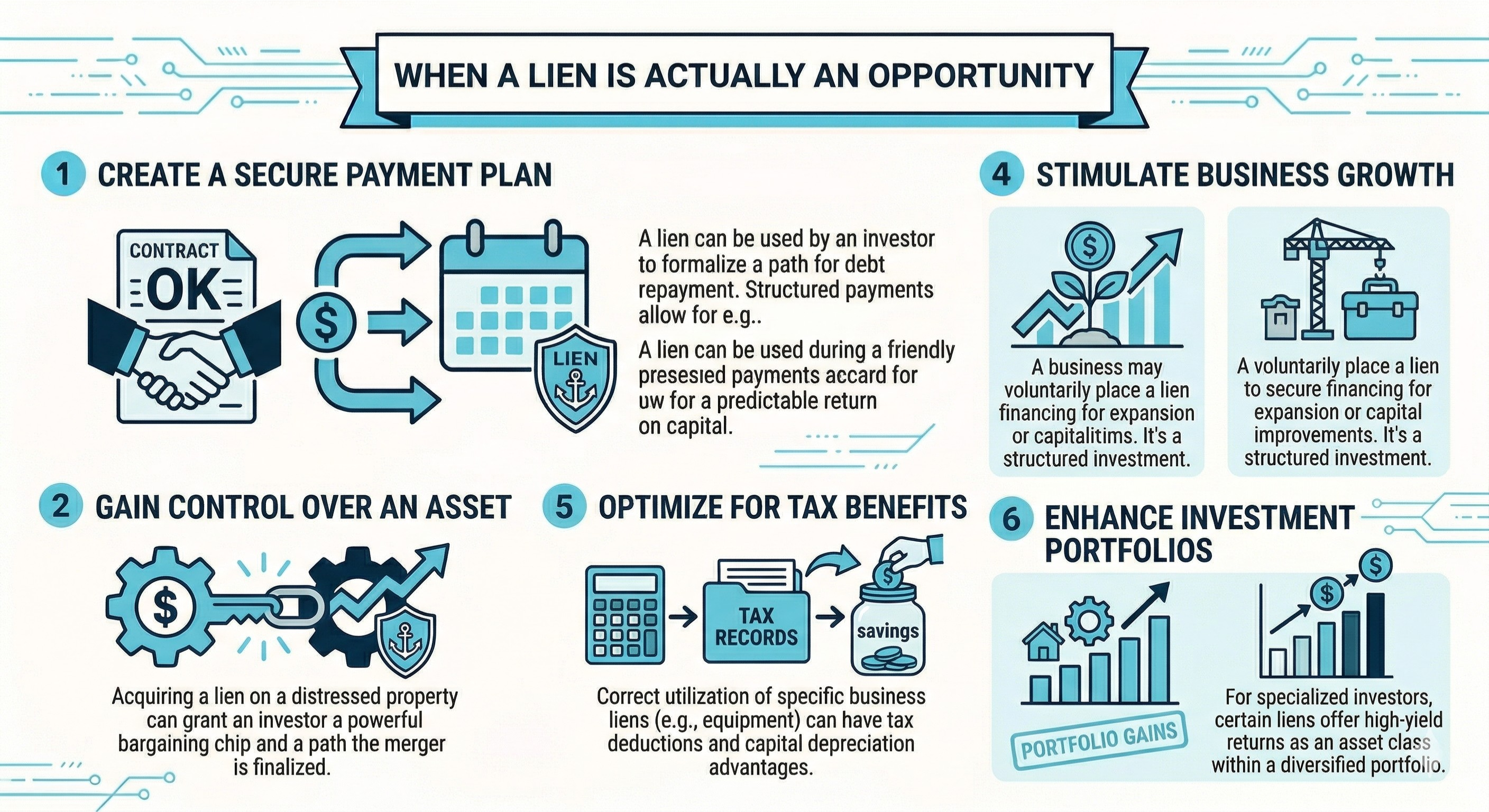
This is a legal, regulated way to invest in many states, and the rules are different in each one. The interest rate is set by state law and these liens usually have priority over mortgages, but returns are not guaranteed and you can lose money. You can explore how it works in more detail through the education programs offered at Tax Lien Wealth Builders services.
If you're serious about building passive income through real estate, understanding how liens work — not just as a risk to avoid, but as an asset class — is worth your time. The United Tax Liens blog covers real examples of how investors navigate the process from auction to return.
Ready to go deeper? Tax Lien Wealth Builders offers structured education for investors who want to learn the tax lien system the right way — not from YouTube clips. Explore your options here and reach out to the United Tax Liens team directly at their contact page. |
Quick Checklist: How to Check If There Are Liens on a Property
Use this before any real estate transaction:
Search the county recorder/register of deeds by owner name and parcel number
Run a federal lien search through the county clerk or IRS
Check state court records for civil judgments
Use free tools like your county assessor's site or ATTOM for a first pass
Order a preliminary title report before closing
Verify any found lien is still legally active (check statute of limitations)
Consult a real estate attorney if anything is unclear or contested
Final Thoughts
Knowing how to find a lien on a property is basic due diligenceThe research and investigation process an investor conducts before purchasing a tax lien or tax deed to evaluate the property and assess risk. — the kind that separates informed investors from people who find out the hard way. The tools are mostly free. The process takes a few hours. And the downside of skipping it can be tens of thousands of dollars in inherited debt.
Once you understand how liens work, you're also better positioned to understand them as investments. If you're curious about that side of the equation, the Tax Lien Wealth Builders team is a good place to start — and the United Tax Liens about page explains who they are and why this niche has attracted serious investors for decades.